Archive for the 'Beyond the Suffering' Category

The Rev. Lemuel Haynes: It’s All about Christ

Monday, January 16th, 2012

The Rev. Lemuel Haynes: It’s All about Christ

Note: This is Part Four of a four-part RPM Ministries Changing Lives blog mini-series for MLK Day 2012: Celebrating the Heroes of Black Church History. Read Part One: Christian Influences on Martin Luther King, Jr. Read Part Two: The Founding Fathers of the Black Church. Read Part Three: A Heroine of Black Church History

The Black Puritan

The Rev. Lemuel Haynes offers a remarkable example of African American ministerial modeling. Born at West Hartford, Connecticut, in 1753, of a white mother and a black father, Haynes lived his entire eighty years in Congregationalist New England. He completed his indenture in time to serve in the Continental Army during the Revolutionary War.

Privately tutored, Haynes became the first African American to be ordained by any religious denomination. Upon ordination, Haynes then served white congregations for more than thirty years.

Among other accomplishments, he achieved notoriety for a sermon entitled Universal Salvation that defended orthodox Christianity against the threat of Universalism. For this work, he happily accepted the title “Black Puritan,” indicating his depth of Reformation theology. Middlebury College awarded him the master’s degree in 1804, another first for an African American.

His Personal Epitaph: A Christ-Centered Purpose

Haynes personal epitaph tells much about how he lived his life and where he placed his focus.

“Here lies the dust of a poor hell-deserving sinner, who ventured into eternity trusting wholly on the merits of Christ for salvation. In the full belief of the great doctrines he preached while on earth, he invites his children and all who read this, to trust their eternal interest on the same foundation” (Epitaph written for himself by Reverend Lemuel Haynes, the “Black Puritan”).

The Rev. Lemuel Haynes pointed not to himself, but to Christ. He understood that, “It’s all about Him!” His trust was solely in Christ and his focus was solely on Christ.

Following Paul’s Model

At age sixty-five, Haynes left his Rutland, Vermont, parish due to political friction that essentially forced him to choose to resign. His farewell sermon of 1818 emphasized, among other topics, his devotion to the work of the ministry and to the people of his congregation. Alluding to the words of the Apostle Paul, Haynes notes that:

“He that provided the motto of our discourse could say on his farewell, I have coveted no man’s silver or gold, or apparel. Yea, ye yourselves know, that these hands have ministered unto my necessity.”

It was important to Haynes with his white parishioners that they recognized his Christ-like diligence. Few could legitimately question his work ethic given that he had preached 5,500 sermons, officiated at over 400 funerals, and solemnized more than 100 marriages.

Gospel-Centered Motivation 

It was also vital to Rev. Haynes that they understood his godly motivations.

“The flower of my life has been devoted to your service:—while I lament a thousand imperfections which have attended my ministry; yet I am not deceived, it has been my hearty desire to do something for the salvation of your souls.”

Haynes acknowledged and wanted his people to realize that the ultimate Judge of his motivations was Christ.

“I must give an account concerning the motives which influenced me to come among you, and how I have conducted during my thirty years residence in this place: the doctrines I have inculcated: whether I have designedly kept back any thing that might be profitable to you, or have, through fear of man, or any other criminal cause, shunned to declare the whole counsel of God. Also, as to the manner of my preaching, whether I have delivered my discourses in a cold, formal manner, and of my external deportment.”

Join the Conversation

What epitaph do you want written about your life? How are you living today to make that happen?

Note: This material is based upon my book Beyond the Suffering: Celebrating the Legacy of African American Soul Care and Spiritual Direction. To read a free sample chapter click here.

RPM Ministries: Equipping You to Change Lives with Christ’s Changeless Truth

Tags: , , , ,

Martin Luther King, Jr. and the Founding Fathers of the Black Church

Saturday, January 14th, 2012

Martin Luther King, Jr. and the Founding Fathers of the Black Church

Note: This is Part Two of a four-part RPM Ministries Changing Lives blog mini-series for MLK Day 2012: Celebrating the Heroes of Black Church History. Read Part One: Christian Influences on Martin Luther King, Jr.  

A Long History

Martin Luther King, Jr. (1929-1968) was, of course, one of the main leaders of the American Civil Rights movement. What is lesser known today is King’s training and ministry as a Baptist pastor. Even fewer people know the long history of African American ministers promoting civil rights.

That history begins with the Reverends Richard Allen (1760-1831) and Absalom Jones (1746-1818). Allen and Jones were foremost founding fathers of the African American independent churches and of the American Civil Rights movement.

Rev. Allen’s Ministry

Allen traveled extensively, preaching in Delaware and Pennsylvania. In February, 1786, he preached at St. George’s Methodist Episcopal Church in Philadelphia. Thinking that he would be there one or two weeks, ministry needs led Allen to a settled place of service in Philadelphia.

Concerned for the wellbeing of African Americans in this parish, he established prayer meetings. “I raised a society in 1786 of forty-two members. I saw the necessity of erecting a place of worship for the coloured people.”

It was at this time that the Rev. Jones united with Rev. Allen. Their little band met great opposition, including “very degrading and insulting language to us, to try and prevent us from going on.”

Notwithstanding, they established prayer meetings and meetings of exhortation, with many people becoming Christians. Their growing congregation, still without a building, often attended services at St. George’s Church. When the black worshippers became more numerous, the white leaders “moved us from the seats we usually sat on, and placed us around the wall.”

Jones’ Convictions

It was at this juncture that one of the most noteworthy events in the American Civil Rights movement occurred. Taking seats that they thought were appropriate, prayer began. Allen describes the scene.

“We had not long been upon our knees before I heard considerable scuffling and low talking. I raised my head up and saw one of the trustees, H. M., having hold of the Rev. Absalom Jones, pulling him up off of his knees, and saying, ‘You must get up—you must not kneel here.’ Mr. Jones replied, ‘Wait until prayer is over.’ Mr. H. M. said ‘No, you must get up now, or I will call for aid and I will force you away.’ Mr. Jones said, ‘Wait until prayer is over, and I will get up and trouble you no more.’”

By the time the second usher arrived, prayer was over, and, according to Allen, “We all went out of the church in a body, and they were no more plagued with us in the church. This raised a great excitement and inquiry among the citizens, in so much that I believe they were ashamed of their conduct.”

The Birth of the Independent Black Church

As a result, Allen and Jones birthed the first independent Black Church in the North when they hired a store room and held worship by themselves. Facing excommunication from the “mother church,” they remained united and strong.

Allen stirringly recounts the situation. “Here we were pursued with threats of being disowned, and read publicly out of meeting if we did continue to worship in the place we had hired; but we believed the Lord would be our friend. . . . Here was the beginning and rise of the first African church in America.”

Some twenty years later, when increasing numbers of African Americans could not worship without harassment in the Methodist Church, Allen and others called a conference which established the first African denomination in America. It was resolved, “That the people of Philadelphia, Baltimore, etc., should become one body, under the name of the African Methodist Episcopal Church.”

Civil Rights, Then and Now

While Americans rightfully pause to remember the historic work of the Rev. Martin Luther King, Jr., it is equally important to reflect on precursors to his work. The Revs. Richard Allen and Absalom Jones paved the way for heroic African American ministers to pursue civil rights, equality, and religious freedom for all Americans.

Join the Conversation

1. Out of the evil of racism, God brought the good of the establishment of the first independent Black church in America. How is God creating good out of evil in your life circumstances?

2. Where does the church in American still need to overcome racial and cultural barriers to experience true oneness in Christ?

Note: This material is based upon my book Beyond the Suffering: Celebrating the Legacy of African American Soul Care and Spiritual Direction. To read a free sample chapter click here.

RPM Ministries: Equipping You to Change Lives with Christ’s Changeless Truth

Tags: , , , ,

Christian Influences on Martin Luther King, Jr.

Friday, January 13th, 2012

Christian Influences on Martin Luther King, Jr.

Note: This is the first of a four-part RPM Ministries Changing Lives blog mini-series for MLK Day 2012: Celebrataing the Heroes of Black Church History.

As Americans celebrate Martin Luther King Day, few are aware of the Christians whose courageous lives influenced his life. Today we learn the rest of the story. 

Rosa Parks: A Woman of Great Conviction

Rosa Parks (1913-2005) was the “Mother of the Modern-Day Civil Rights Movement” according to the U.S. Congress. On December 1, 1955, Parks became famous for refusing to obey bus driver James Blake’s order that she give up her seat to make room for a White passenger.

Her actions started the Montgomery Bus Boycott, which was one of our nation’s largest movements against racial segregation. In addition, it helped to launch Martin Luther King, Jr., who was involved with the boycott, to prominence in the Civil Rights movement. Rosa Parks has had a lasting worldwide legacy.

Daniel Alexander Payne: The Rosa Parks of His Day

Seventy years earlier, Daniel Alexander Payne (1811-1893) engaged in a similar, but lesser-known act of civil disobedience. Had his actions been more widely reported, Payne might today be known as the “Father of the Former-Day Civil Rights Movement.”

Born to free Black parents in Charleston, South Carolina, Payne was an early leader in and the official historian for the African Methodist Episcopal Church (AMEC). Leaving the South in 1834, Payne studied at the Lutheran Theological Seminary in Gettysburg, PA, and then ministered for over fifty years as a pastor, educator, and influential bishop.

Payne’s ministry returned him to the South in the twilight years of his life. When he was in his seventies, he refused to stay on a train where he would have been seated in Jim Crow conditions. Standing his ground and confronting the White authorities on the train, he said to them, “Before I’ll dishonor my manhood by going into that car, stop your train and put me off.”

Payne describes the scene after he left the train. “The guilty conductor looked out and said, ‘Old man, you can get on the platform at the back of the car.’ I replied only by contemptuous silence.”

Payne then carried his own luggage, walking a great distance over “a heavy bed of sand” to his next speaking engagement in the deep South. Payne literally walked the talk. By doing so, he was the predecessor of later-day Civil Rights leaders such as Parks.

The Father of Daniel Alexander Payne: Dare to Be a Daniel

How did such courage develop in Payne’s life? Where did such conviction emanate from in his background?

Payne himself credits his father as the man who started him on his purposeful life.

“I was the child of many prayers. My father dedicated me to the service of God before I was born, declaring that if the Lord would give him a son that son should be consecrated to him, and named after the Prophet Daniel.”

And now you know the rest of the story.

Payne marveled at the sense of self, the sense of masculinity, that his father conveyed to him. His father did so not only by naming, but also by modeling. Of his father, Payne testifies:

“He was an earnest Christian and a class leader, having two classes under him—what used to be called the Seekers’ Class and the Members’ Class. He was a faithful observer of family worship; and often his morning prayers and hymns aroused me, breaking my infant sleep and slumbers.”

Linked by Legacy: From Payne to Parks to King 

Similarly and ironically, Rosa Parks’ courage was embedded in her through her upbringing in the African Methodist Episcopal Church, where she was mentored during her lifelong active membership. Here she heard of the inspiring exploits of AMEC Bishop Daniel Alexander Payne.

In 1995, she published her memoirs, Quiet Strength, which focused on the role that her faith played in her life. Parks also noted the impact on her life of her mother, a teacher, who home-schooled her until she was eleven.

Daniel Alexander Payne, Rosa Parks, and Martin Luther King, Jr., all lived courageous, exemplary lives of racial reconciliation. Each stands on the shoulders of those who have gone before them. We trace the legacy from Daniel’s father, to Daniel, to Rosa Park’s mother, to Rosa, and then to Martin. And ultimately to the Bible’s Daniel.

Join the Conversation 

Do you think we would be talking about MLK Day if not for Daniel Alexander Payne, his father, Rosa Parks, her mother, and the Bible’s Daniel?

Who has provided a spiritual legacy of courage that you have followed in your Christian life?

Note: This material is based upon my book Beyond the Suffering: Celebrating the Legacy of African American Soul Care and Spiritual Direction. To read a free sample chapter, click here.

RPM Ministries: Equipping You to Change Lives with Christ’s Changeless Truth

Tags: , , , ,

Beyond the Suffering Book Trailer

Thursday, March 24th, 2011

Beyond the Suffering Book Trailer 

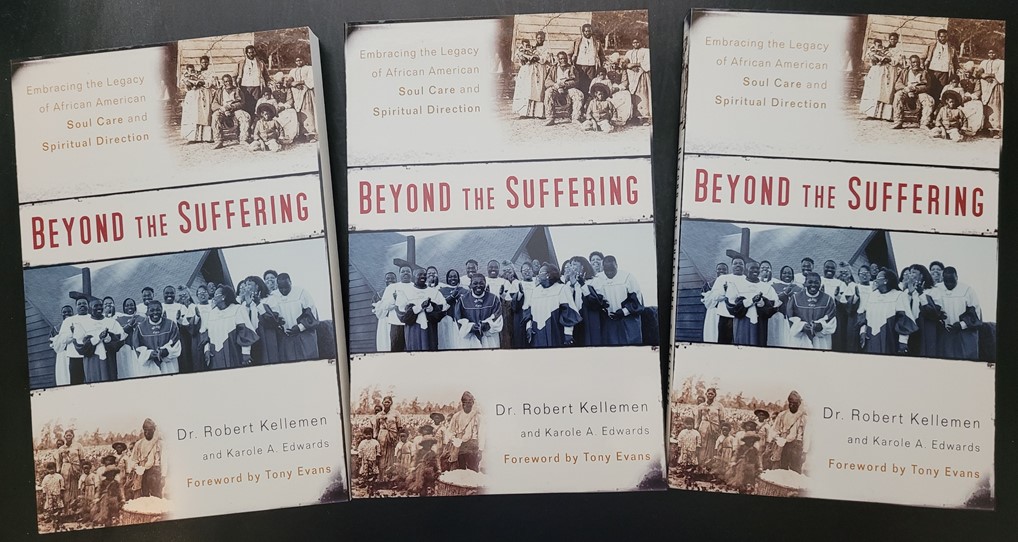
Beyond the Suffering: Embracing the Legacy of African American Soul Care and Spiritual Direction is for everyone who loves stories of victory snatch from the jaws of defeat.

Learn more about Beyond the Suffering as you enjoy the video book trailer where I share about:

• How a “white guy” ended up writing about the heroes of black church history

• How Beyond the Suffering is for all people of all ethnicities

• One of the many powerful narratives from Beyond the Suffering

Watch the video on our RPM Ministries YouTube Channel.

Visit our Beyond the Suffering page to read a free sample chapter and learn how you can order an autographed copy of Beyond the Suffering at 40% off.


Share


Tags: , , , ,

Rev. Richard Allen: Founding the First Free Black Church

Wednesday, February 16th, 2011

Rev. Richard Allen: Founding the First Free Black Church

Rev. Richard Allen was one of the foremost founding fathers of the African American independent churches. Born a slave in 1760, to Benjamin Crew of Philadelphia, Allen came to salvation in Christ around age twenty. He then traveled extensively, preaching the Gospel in Delaware and Pennsylvania. In February, 1786, he preached at St. George’s Methodist Episcopal Church in Philadelphia. Thinking that he would be there one or two weeks, ministry needs led Allen to a settled place of service in Philadelphia.

Concerned for the wellbeing of African Americans in this parish, he explained that:

“I established prayer meetings; I raised a society in 1786 of forty-two members. I saw the necessity of erecting a place of worship for the coloured people.” However, only three brethren united with him, including the equally-important African American founding father, the Reverend Absalom Jones. Their little band met great opposition, including “very degrading and insulting language to us, to try and prevent us from going on.”

The Lord blessed their endeavors, as they established prayer meetings and meetings of exhortation, with many coming to Christ. Their growing congregation, still without a building, often attended services at St. George’s Church. When the black worshippers became more numerous, the white leaders “moved us from the seats we usually sat on, and placed us around the wall.”

The Founding of the First Independent African American Church

It was at this juncture that one of the most noteworthy events in African American Church history occurred. Taking seats that they thought were appropriate, prayer began.

“We had not long been upon our knees before I heard considerable scuffling and low talking. I raised my head up and saw one of the trustees, H— M—, having hold of the Rev. Absalom Jones, pulling him up off of his knees, and saying, ‘You must get up—you must not kneel here.’ Mr. Jones replied, ‘Wait until prayer is over.’ Mr. H— M— said ‘no, you must get up now, or I will call for aid and I force you away.’ Mr. Jones said, ‘Wait until prayer is over, and I will get up and trouble you no more.’”

By the time the second usher arrived, prayer was over, and:

“We all went out of the church in a body, and they were no more plagued with us in the church. This raised a great excitement and inquiry among the citizens, in so much that I believe they were ashamed of their conduct.”

As a result, they birthed the first independent Black Church in the North when they hired a store room and held worship by themselves. Facing excommunication from the “mother church,” they remained united and strong.

“Here we were pursued with threats of being disowned, and read publicly out of meeting if we did continue to worship in the place we had hired; but we believed the Lord would be our friend. . . . Here was the beginning and rise of the first African church in America.”

Join the Conversation

What can you learn from Revs. Allen and Jones’ example? How similar or different are race relations today among Christians than in the day of Revs. Allen and Jones?

Note: This series for Black History Month is excerpted from Beyond the Suffering: Embracing the Legacy of African American Soul Care. To learn more and to read a sample chapter visit Beyond the Suffering.


Share


Tags: , , , ,

Hardships Do Not Make It Too Hard To Love

Monday, February 14th, 2011

Hardships Do Not Make It Too Hard To Love

When everything in life seems to fight against family life, where do we find family unity? We uncover amazing examples of unity even through tragedy in the narratives of The Heroes of Black Church History.

Deep and Fond Affection

It has become something of a cliché to imagine that black families today find it difficult to experience stability because of a long history of instability caused by slavery and racism. While not at all minimizing the obstacles that enslaved African American families have faced, history paints a truer and more optimistic picture of their response.

Though everything fought against them, enslaved African Americans battled gallantly to maintain family cohesion—a cohesion that provided a sturdy platform from which to handle life courageously.

Communicating the message of African American family love was so important to the Reverend Thomas Jones that he bore witness to it on the very first page of his narrative.

“I can testify, from my own painful experience, to the deep and fond affection which the slave cherishes in his heart for his home and its dear ones. We have no other tie to link us to the human family, but our fervent love for those who are with us and of us in relations of sympathy and devotedness, in wrongs and wretchedness.”

Satan longs to blind African Americans to their legacy of family love. He wants all of us to believe that hardships make it too hard to love. Jones’ family and millions like them, belie that lie.

Pulling the Rope in Unison

Enslaved African American couples sustained strong marital relationships. Venture Smith was born in Dukandarra, in Guinea, about 1729. Kidnapped at age eight, Robertson Mumford purchased him a year later. After living with Mumford for thirteen years, Venture married Meg at age twenty-two. They remained together for over forty-seven years, through many trials and tribulations, until parted by death.

Venture’s narrative contains an explanation for their marital faithfulness. On the occasion of their marriage, Venture threw a rope over his cabin and asked his wife to go to the opposite side and pull on the rope hanging there while he remained and pulled on his end. After they both had tugged at it awhile in vain, he called her to his side of the cabin and by their united effort they drew the rope to themselves with ease. He then explained the object lesson to his young bride.

“If we pull in life against each other we shall fail, but if we pull together we shall succeed.”

Premarital couples, newlyweds, and seasoned married spouses would all do well to heed Venture’s guiding wisdom. In fact, singles trying to get along with friends, co-workers trying to build a strong team, and churches trying to remain unified in Christ would all be wise to follow Venture Smith’s powerful example.

Join the Conversation

What hardships can you overcome in Christ to love others like Christ? In what situations do you need to pull the rope in unison to experience harmony in Christ?

Note: This series for Black History Month is excerpted from Beyond the Suffering: Embracing the Legacy of African American Soul Care. To learn more and to read a sample chapter visit Beyond the Suffering


Share


Tags: , , ,