Archive for the 'Black Church History' Category

Black History Month: Day of Reflection

Sunday, February 28th, 2010

The Forty-Day Journey of Promise

Black History Month: Day of Reflection

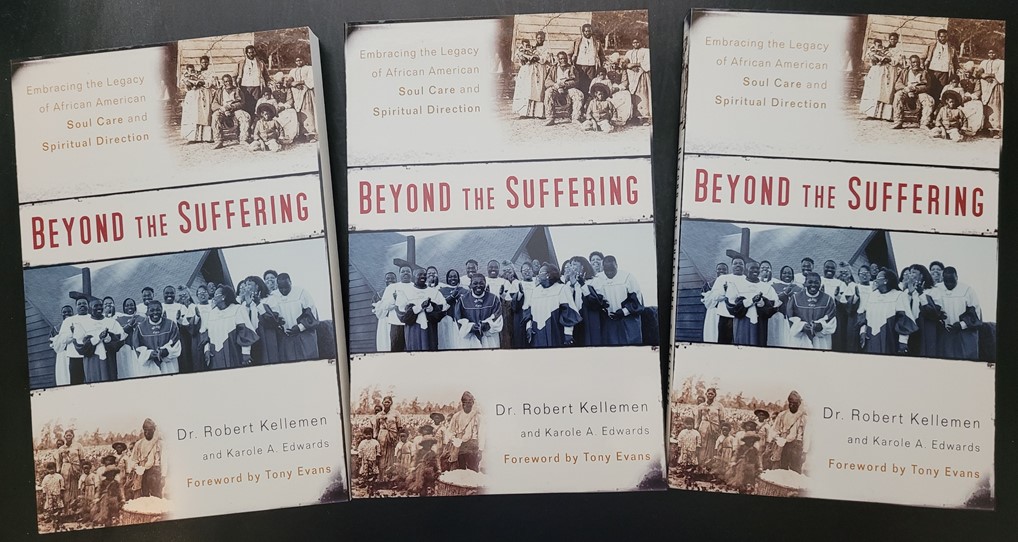
Note: Welcome to the final day of The Journey, our forty-day blog series from MLK Day through the end of Black History Month. We’ve learned life lessons from the legacy of African American Christianity. I’ve based our series on material from my book Beyond the Suffering. To learn more about Beyond the Suffering, including downloading a free chapter, click here.

My Reflections: A Gift To and a Gift From

As I promised at the outset, on our 41st day, we pause to reflect. We pause to celebrate the legacy of African American Christianity and to celebrate the heroes and heroines of Black Church history.

In the introduction to Beyond the Suffering, we noted that Black Church history is a gift to African Americans and a gift from African Americans.

As a gift to, it honors the tremendous contributions made by African American believers—contributions frequently neglected by most historians.

As a gift from, it equips and empowers all people of all races as we learn life lessons from female and male heroes of Black Church history.

It is my prayer that the past forty days have served a similar purpose: that my longest-ever blog series has been a gift to and a gift from African Americans.

It never ceases to amaze me that so few people are aware of these amazing Christians and their remarkable life stories. I hope their treasure will now remain unburied.

Biblical Reflections: From the Past Into the Future

We complete our journey with two biblical reflections.

*Reflection # 1: Hebrews 11:1-12:3

The great past cloud of witnesses, though dead, their lives yet speak. I’m thankful that our legacy outlives us.

I’m thankful for the African American legacy. Their legacy encourages and empowers us to live beyond the suffering and to leave a loving legacy for future generations.

*Reflection # 2: Revelation 7:9

When the Apostle John peers into the future, he does not see a homogenized eternity. Instead, he sees a multi-cultural future throng gathered together for ever and ever in joint worship of the King of Kings.

I’m thankful that diversity will outlive the old heaven and the old earth. I’m thankful that in the new heaven and the new earth our differences will be celebrated. I want to live today in light of that future intercultural day.

Your Reflections: Join the Conversation (Post a Comment for a Chance to Receive a Copy of Beyond the Suffering)

*Reflecting on everything you’ve read during these forty days of Black History Month, what topics and themes stand out to you? Why? What will you do with these concepts?

*How can we keep the gift going and growing?

*How can we expand intercultural ministry and multicultural relationships?

Share/Bookmark

Tags: , , , ,

Following the North Star

Friday, February 26th, 2010

The Forty-Day Journey of Promise

Day Thirty-Nine: Following the North Star

Note: Welcome to The Journey, our forty-day blog series from MLK Day through the end of Black History Month. We’re learning life lessons from the legacy of African American Christianity. The series is based upon material from my book Beyond the Suffering. To learn more about Beyond the Suffering, including downloading a free chapter, click here.

Father to the Fatherless

We follow the North Star guidance of African American sisters of the Spirit by encouraging spiritual sisters with the good news that the Spirit intimately indwells them. Jarena Lee reminds us of this truth because she experienced it.

Jarena Lee

In the course of six years, five of her family members died, including her husband. In response, she wrote:

“I was now left alone in the world, with two infant children, one of the age of about two years, the other six months, with no other dependence than the promise of Him who hath said—I will be the widow’s God, and a father to the fatherless.”

Turning to Our Brothers and Sisters

Along with Lee, we need to help our spiritual friends to see the two primary ways that the indwelling Spirit ministers. First, he uses his other children. Lee recounts:

“Accordingly, he raised me up friends, whose liberality comforted and solaced me in my state of widowhood and sorrows. I could sing with the greatest propriety the words of the poet, ‘He helps the stranger in distress, the widow and the fatherless, and grants the prisoner sweet release.”

Such awareness is vital. The temptation when we are hurt by people is to turn only to God. This pseudo-spirituality is not the way of the Spirit. African American female exemplars like Lee demonstrate that the Spirit uses brothers and sisters of the Spirit to sustain, heal, reconcile, and guide us.

Turning to Our Heavenly Father

Second, the Spirit does indeed work directly in and on our hurting hearts. Lee understood this truth, also.

“I can say even now, with the Psalmist, ‘Once I was young, but now I am old, yet I have never seen the righteous forsaken, nor his seed begging bread.’ I have ever been fed by his bounty, clothed in his mercy, comforted and healed when sick, succored when tempted, and every where upheld by his hand.”

This “balancing” awareness is also crucial. The temptation when we are helped by people is to keep turning only to people. These sisters of the Spirit led people to the Spirit for His sustaining, healing, reconciling, and guiding. Our source of spiritual care is not either/or. It is both/and.

Join the Conversation (Post a Comment for a Chance to Receive a Copy of Beyond the Suffering)

1. How can our churches become places where we turn to one another as brothers and sisters and to God as Father for sustaining, healing, reconciling, and guiding?

2. What do these inspiring messages from sisters of the Spirit inspire you to do?

Tags: , , , ,

Sisters of the Spirit

Sunday, February 21st, 2010

The Forty-Day Journey of Promise

Day Thirty-Four: Sisters of the Spirit

Note: Welcome to The Journey, our forty-day blog series from MLK Day through the end of Black History Month. We’re learning life lessons from the legacy of African American Christianity. The series is based upon material from my book Beyond the Suffering. To learn more about Beyond the Suffering, including downloading a free chapter, click here.

The Invisible Woman

In the South, women faced slavery; in the North, prejudice. Everywhere they confronted double oppression—they were black and they were female.

Their remarkable stories must be told for the sake of all women, regardless of race. Their independence and strength, boldness and courage, ministry and sacrifice, care and concern, despite overwhelming obstacles, provide extraordinary models for women today.

The historical invisibility of African American Christian women is inexcusable. As the following posts attest, history is replete with countless black female exemplars of soul care and spiritual direction. Their obscurity is due to our willful blindness, not their lack of brilliance. Shining a light on their stories illuminates for all of us the visible, palpable ways in which they sustained, healed, reconciled, and guided, not only individuals, but an entire nation.

Mother Wit

Feminine African American spiritual directors followed the ancient model that Moses outlines in Deuteronomy 6:6-7. “These commandments that I give you today are to be upon your hearts. Impress them on your children. Talk about them when you sit at home and when you walk along the road, when you lie down and when you get up.”

With biological children and with “spiritual” children, with females and with males, older African American women shared their “mother wit”—their proverbial wisdom found in the Scriptures, cultivated in community, and applied to daily life. One former slave from Louisiana offers her picturesque description of mother wit.

“I got Mother Wit instead of an education. Lots of colored people in offices and school don’t seem to know what Mother Wit is. Well, it’s like this: I got a wit to teach me what’s wrong. I got a wit to not make me a mischief-maker. I got a wit to keep people’s trusts. No one has to tell me not to tell what they say to me in confidence, for I respect what they say, and I never tell. I’m glad I had good raisin.’”

The mother wit schoolhouse was life, the textbook was the Bible. The lesson plan highlighted the generational passing of insights for living. The curriculum included reconciling (being taught “what’s wrong”), guiding (not being a “mischief-maker”), rapport building (“keep people’s trusts”), confidentiality (“I never tell”), respectful listening (“I respect what they say”), and so much more.

Join the Conversation (Post a Comment for a Chance to Receive a Copy of Beyond the Suffering)

1. What impact could knowledge of African American sisters of the Spirit have upon Americans? African Americans? African American females?

2. Why do you think that the history of African American females like these is so infrequently highlighted? What could be done to reverse this pattern?

3. Who has offered you mother wit: biblical wisdom filtered through mature life experience applied to your specific life situation? How? What impact has it had on you?

Tags: , , , ,

The Old Ship of Zion

Saturday, February 20th, 2010

The Forty-Day Journey of Promise

Day Thirty-Three: The Old Ship of Zion

Note: Welcome to The Journey, our forty-day blog series from MLK Day through the end of Black History Month. We’re learning life lessons from the legacy of African American Christianity. The series is based upon material from my book Beyond the Suffering. To learn more about Beyond the Suffering, including downloading a free chapter, click here.

Empowering the Flock

Perhaps the greatest legacy of the founding fathers of the Black Church was that they did not endeavor to leave a personal legacy, but a corporate one. Ministry was not about themselves, but about empowering and equipping the flock to do the work of mutual ministry (Ephesians 4:11-16).

Truly they were fathers—birthing a family of shepherds.

Their corporate legacy produced fruit. Because of their examples, African American pastoral care has not simply been about what the pastor does for the flock, but has involved the mutual one another ministry of the flock.

“What, then is this distinct emphasis that makes a black perspective in pastoral care and counseling unique? It is the corporate nature of pastoral care and counseling in the black church. . . . The term corporate means that the care of the individual is the function of the whole community, rather than the function of the pastor or any other specially designated person who possesses specialized skills.”

On the “old ship of Zion,” there are no passengers, only crew members.

Entering the Great Family of Holy Freedom: Equipping for Family Life

Daniel Alexander Payne

On April 11, 1862, Congress passed a bill abolishing slavery in the District of Columbia. Rev. Daniel Alexander Payne, then Bishop of the Second Episcopal District of the AMEC, visited President Lincoln to implore him to sign the bill. When Lincoln signed the bill five days later, Payne authored Welcome to the Ransomed to equip newly freed African Americans.

Using as his yardstick the Apostle Paul’s mentoring of Timothy as Timothy pastored the saints at Ephesus, Payne explains the duty of the laity.

“But foremost of all the duties which he enjoined upon the Ephesian ministry and laity were those of making ‘Supplications, prayers, intercessions, and giving of thanks for all men.’”

Having stated the duty and quoted the verse, Payne painstakingly exegetes who to pray to, what to pray for, how to pray, and with what attitude to pray.

Their prayer lives inaugurated, Payne then guides them in the use of their new freedom.

“Enter the great family of Holy Freedom; not to lounge in sinful indulgence, not to degrade yourselves by vice, nor to corrupt society by licentiousness, neither to offend the laws by crime, but to the enjoyment of a well regulated liberty. . . Welcome to habits of industry and thrift—to duties of religion and piety . . .”

As a wise father, Payne teaches his children how to appropriately use their newfound freedom and growing responsibility.

His counsel ranges from the sublime (“We entreat you to never be content until you are emancipated from sin”) to the mundane (“Work, work, work!”). His advice is practical and culturally sensitive. “Permit us, also, to advise you to seek every opportunity for the cultivation of your minds. . . . Rest not till you have learned to read the Bible.

Payne reserves his most ardent counsel for parents.

“But of the children take special care. Heaven has entrusted them to you for a special purpose. What is that purpose? Not merely to eat and to drink, still less to gormandize. Not merely to dress finely in broadcloths, silks, satins, jewelry, nor to dance to the sound of the tambourine and fiddle; but to learn them how to live and how to die—to train them for great usefulness on earth—to prepare them for greater glory in heaven.”

Payne exhorts faithful parents to pass the baton of faith to faithful children who would continue the spiritual relay. In this he follows Paul’s ministry plan. “And the things you have heard me say in the presence of many witnesses entrust to reliable men who will also be qualified to teach others” (2 Timothy 2:2).

Join the Conversation (Post a Comment for a Chance to Receive a Copy of Beyond the Suffering)

1. African American founding fathers empowered the flock by birthing a family of shepherds. Specifically, what can church leaders today do to equip equippers?

2. What can you do to equip other believers?

Tags: , , ,

The Black Puritan

Wednesday, February 17th, 2010

The Forty-Day Journey of Promise

Day Thirty: The Black Puritan

Note: Welcome to The Journey, our forty-day blog series from MLK Day through the end of Black History Month. We’re learning life lessons from the legacy of African American Christianity. The series is based upon material from my book Beyond the Suffering. To learn more about Beyond the Suffering, including downloading a free chapter, click here.

The Rev. Lemuel Haynes: Pastor, Author, Theologian

The Rev. Lemuel Haynes Preaching the Word

Lemuel Haynes offers yet another remarkable example of African American ministerial modeling. Born at West Hartford, Connecticut, in 1753, of a white mother and a black father, Haynes lived his entire eighty years in Congregationalist New England. He completed his indenture in time to serve in the Continental Army during the Revolutionary War.

Privately tutored, Haynes became the first African American to be ordained by any religious denomination. Upon ordination, Haynes then served white congregations for more than thirty years.

Among other accomplishments, he achieved notoriety for a sermon entitled Universal Salvation that defended orthodox Christianity against the threat of Universalism. For this work, he happily accepted the title “Black Puritan,” indicating his depth of Reformation theology. Middlebury College awarded him the master’s degree in 1804, another first for an African American.

His Personal Epitaph: A Life Worth Living

Haynes personal epitaph tells much about how he lived his live and where he placed his focus.

“Here lies the dust of a poor hell-deserving sinner, who ventured into eternity trusting wholly on the merits of Christ for salvation. In the full belief of the great doctrines he preached while on earth, he invites his children and all who read this, to trust their eternal interest on the same foundation” (Epitaph written for himself by Reverend Lemuel Haynes, the “Black Puritan”).

The Rev. Lemuel Haynes pointed not to himself, but to Christ. He understood that “it’s all about Him!” His trust was solely in Christ and his focus was solely on Christ.

Following Paul’s Model

At age sixty-five, Haynes left his Rutland, Vermont, parish due to political friction that essentially forced him to choose to resign. His farewell sermon of 1818 emphasized, among other topics, his devotion to the work of the ministry and to the people of his congregation.

Alluding to the words of the Apostle Paul, Haynes notes that:

“He that provided the motto of our discourse could say on his farewell, I have coveted no man’s silver or gold, or apparel. Yea, ye yourselves know, that these hands have ministered unto my necessity.”

Like George Liele with his black congregation, it was important to Haynes with his white parishioners that they recognized his Christlike diligence. Few could legitimately question his work ethic given that he had preached 5,500 sermons, officiated at over 400 funerals, and solemnized more than 100 marriages.

Godly Motivation

It was also vital to Rev. Haynes that they understood his godly motivations.

“The flower of my life has been devoted to your service:—while I lament a thousand imperfections which have attended my ministry; yet I am not deceived, it has been my hearty desire to do something for the salvation of your souls.”

Haynes acknowledged and wanted his people to realize that the ultimate Judge of his motivations was Christ.

“I must give an account concerning the motives which influenced me to come among you, and how I have conducted during my thirty years residence in this place: the doctrines I have inculcated: whether I have designedly kept back any thing that might be profitable to you, or have, through fear of man, or any other criminal cause, shunned to declare the whole counsel of God. Also, as to the manner of my preaching, whether I have delivered my discourses in a cold, formal manner, and of my external deportment.”

Join the Conversation (Post a Comment for a Chance to Receive a Copy of Beyond the Suffering)

1. What epitaph do you want written about your life? How are you living today to make that happen?

2. Rev. Haynes happily accepted the title “Black Puritan” because of his commitment to the “sola” of salvation by Christ alone. What stand for biblical truth are you most passionate about?

Tags: , , , ,

The Black Protestant Work Ethic

Tuesday, February 16th, 2010

The Forty-Day Journey of Promise

Day Twenty-Nine: The Black Protestant Work Ethic

Note: Welcome to The Journey, our forty-day blog series from MLK Day through the end of Black History Month. We’re learning life lessons from the legacy of African American Christianity. The series is based upon material from my book Beyond the Suffering. To learn more about Beyond the Suffering, including downloading a free chapter, click here.

Pastor George Liele: Modeling Ministry Commitment

African American founding fathers emphasized in their messages and modeled in their ministries a Black Protestant work ethic. The oft-imagined, but quite-mistaken view of African American male slaves as lazy and slothful was crushed by both slave and free African American pastors.

Rev. George Liele

Some slaves in the South were able to establish independent churches during the Revolutionary era. Perhaps the earliest to do so was George Liele. Born in Virginia, in 1742, he moved with his master, Henry Sharpe, to Burke County, Georgia, a few years before the Revolutionary War. Liele was converted under the preaching of Baptist Matthew Moore at his master’s church. In 1777, Liele founded a Black Baptist congregation at Yama Craw, outside Savannah.

Eyewitness accounts applauded his commitment to ministry, even while still a lay person.

“He began to discover his love to other negroes, on the same plantation with himself, by reading hymns among them, encouraging them to sing, and sometimes by explaining the most striking parts of them.”

Liele’s own account equally expresses his passion for serving God and God’s people.

“Desiring to prove the sense I had of my obligations to God, I endeavoured to instruct the people of my own color in the Word of God: the white brethren seeing my endeavours, and that the word of the Lord seemed to be blessed, gave me a call at a quarterly meeting to preach before the congregation.”

Instant in Season and Out

Later licensed (by whites) as a minister, Liele served in Yama Craw and in Kingston, Jamaica. As a pastor, he preached twice on Sunday, and twice during the week.

“I receive nothing for my services; I preach, baptize, administer the Lord’s supper, and travel from place to place to publish the gospel, and to settle church affairs, all freely.”

Like the Apostle Paul, Liele supported himself through his own industry.

“My occupation is a farmer, but as the seasons in this part of the country, are uncertain, I also keep a team of horses, and wagons for the carrying goods from one place to another; which I attend to myself, with the assistance of my sons; and by this way of life have gained the good will of the public, who recommends me to business, and to some very principal work for government.”

Like countless other African American founding fathers, Liele’s industry became a benchmark urging other African American males towards responsibility and productivity.

The Rev. Andrew Bryan: The Model Sticks

Liele’s model stuck. One of his converts and disciples, Andrew Bryan, accepted the baton of pastoral leadership at Yama Craw.

Like his mentor, Bryan personified sacrificial ministry. White citizens, worried about slave rebellion, had him arrested and whipped twice for holding “illegal” meetings. According to an early Baptist historian, Andrew “told his persecutors that he rejoiced not only to be whipped, but would freely suffer death for the cause of Jesus Christ.”

Join the Conversation (Post a Comment for a Chance to Receive a Copy of Beyond the Suffering)

1. What impact could knowledge of an African American leader like George Liele have upon Americans? African Americans? African American males?

2. How could you apply Liele’s ministry commitment to your life?

Share/Bookmark

Tags: , , , , ,

Soul Care Among the Slaves: A Treasure of African American Testimony

Tuesday, February 16th, 2010

Soul Care Among the Slaves: A Treasure of African American Testimony

Trevin Wax, over at his excellent site, Kingdom People, posted a very encouraging and insightful review of Beyond the Suffering. You can read his full review here at Soul Care Among the Slaves: A Treasure of African American Testimony.

Here’s an appetizer to whet your appetite.

Beyond the Suffering combines historical accounts and personal stories. By going back and forth between the history of the period and the specific stories of people caught in slavery, the authors are able to recommend practical modern-day applications for soul care.

The title describes the book well. This book is not just about suffering and sin. It’s about how grace moves us beyond both.

What do we learn from the testimony of these forefathers in the faith? For one, counseling is not merely an individualistic endeavor. We tend to think of care and counseling as one individual helping another. But the African American testimony shows us how families, churches, and communities can corporately provide soul care.

The authors provide a chilling example…”

To continue reading, please visit Trevin’s blog post.

Share/Bookmark

Tags: , , , ,

Thank God I Shall Not Live Here Always!

Monday, February 8th, 2010

The Forty-Day Journey of Promise

Day Twenty-One: Thank God I Shall Not Live Here Always!

Note: Welcome to The Journey, our forty-day blog series from MLK Day through the end of Black History Month. We’re learning life lessons from the legacy of African American Christianity. The series is based upon material from my book Beyond the Suffering. To learn more about Beyond the Suffering, including downloading a free chapter, click here.

Future Memory

Pastor Peter Randolph describes how enslaved African Americans consoled each other as they parted at the end of each secret worship service.

“The slave forgets all his suffering, except to remind others of the trials during the past week, exclaiming, ‘Thank God, I shall not live here always!’ Then they pass from one to another, shaking hands, bidding each other farewell, promising, should they meet no more on earth, to strive to meet in heaven, where all is joy, happiness and liberty. As they separate, they sing a parting hymn of praise.”

What an interesting phrase. How can people simultaneously forget their suffering and remind others of their trials?

Actually, it’s quite brilliant. We can’t truly forget the evils we have suffered. Nor should we try. Instead, we should remind ourselves and others of our trials, but we must remember the past while remembering the future. “Thank God, I shall not live here always!”

What perfect “balance.” Don’t deny the past. Do dialogue and trialogue (you, your friend, and God in a three-way spiritual conversation) about the past in light of the future—eternity, heaven.

A Slack Grip; A Taut Grip

Their grip on this world was slack. “Ashes to ashes. Dust to dust. Here today. Gone tomorrow. Like a vapor. Like a fading flower and withering grass.”

Their grip on the next world was taut. “Into Thy hands I commend my spirit. Even so, come quickly, Lord Jesus. Maranatha.”

The result? They are deeply connected with one another—passing from one another, shaking hands, bidding farewell, promising to meet again, some day, somewhere.

They are genuinely content within their own souls—knowing joy, happiness, and liberty, though outwardly experiencing the opposites. They are profoundly communing with Christ—singing a parting hymn of praise, certainly not for their circumstances, definitely in spite of their situations, but preeminently because of who God is.

How amazing it would be to leave every worship and fellowship service like enslaved African American believers did. If they could, given their lot in life, why not us?

Join the Conversation (Post a Comment for a Chance to Receive a Copy of Beyond the Suffering)

1. What might it look like in your life to remember the past (hurts) while remembering the future (hope)?

2. How would our congregations be different if we did this with one another regularly?

Tags: , , , ,

The Controversy Regarding Black History Month

Sunday, February 7th, 2010

The Controversy Regarding Black History Month

As I speak around the country on Beyond the Suffering: Embracing the Legacy of African American Soul Care and Spiritual Direction, I’m frequently asked, “What do you think about Black History Month?”

The question comes from my African American friends, many of whom are split both ways. Some think Black History Month is a net positive for African Americans, while others believe it is a net negative. That question also comes from my non-African American friends, who are equally split, and for various reasons.

Having outlined The History of Black History Month in 1,000 words, now it’s time to discuss The Controversy Regarding Black History Month in 2,000 words. Is Black History Month still a net positive or a net negative for African Americans? For America in general?

It’s In the News

Jesse Washington, AP National Writer, recently wrote the article, “Time to End Black History Month?” He opened with the question, “Should Black History Month itself fade into history?”

Many people, both Whites and Blacks, argue that Black history should be incorporated into year-round education. For instance, Washington quotes Stephen Donovan, a 41-year-old lawyer, saying, “If Obama’s election means anything, it means that African American history IS American history and should be remembered and recognized every day of the year.”

Donovan continued by saying that ending “paternalistic” observations like Black History Month would lead to not “only a reduction in racism, but Whites more ready, willing, and able to celebrate our differences and enjoy our traditions without feeling the strain of guilt that stifles frank dialogue and acceptance across cultures?”

The President Thinks So

Other portions of Washington’s article support another side of the story: the continued need for Black History Month. President Obama, like all his predecessors since the 1970s, believes Black History Month should continue. On February 2, he lauded “National African American History Month” calling upon “public officials, educators, librarians, and all people of the United States to observe this month with appropriate ceremonies, activities, and programs that raise awareness and appreciation of African American history.”

Daryl Scott, Chairman of the history department at Howard University and Vice President of programming for ASALH, says Black History Month is still needed to solidify and build upon America’s racial gains. “To know about the people who make up society is to make a better society,” he says. “A multiracial, multiethnic society has to work at its relationships, just like you have to work at your marriage.”

“I don’t see it going away,” said Spencer Crew, a history professor at George Mason University, adding that a diverse year-round history curriculum can still be augmented in depth during Black History Month. “There’s a Women’s History Month,” Crew said. “No one would argue that we don’t need to be reminded of women who have done things that are important.”

Is Morgan Freeman Right?

Jessica McElrath asks it this way, “Has African American history now converged with American history, and, therefore, should the celebration be eliminated?”

Some believe that this is the case. According to Rochelle Riley, yes, the time has come to end Black History Month. Riley asserts that Black history is American history. So, suggests Riley, it’s time to stop celebrating, learning, and being American separately. It’s time to be an America where learning about Blacks, Hispanics, and Asians is part of school curriculums.

Morgan Freeman, a long-time critic of the holiday, strongly believes that Black History Month is not just unnecessary but “ridiculous.” According to Freeman in a December 2005, 60 Minutes interview, Black history should not be relegated to a month. In fact, argues Freeman, Black history, after all, is American history.

Shining the Light of Truth

Jessica McElrath surmises that most historians and African Americans believe that Black History Month remains necessary. According to McElrath, Black History Month is the only time of the year when Black history is recognized in many schools. She argues that schools often focus on White history year round, and, therefore, Black History Month is a necessary celebration.

A recent visitor to my blog expressed her convictions powerfully.

“It appears that the prevalence of multi-culturalism has caused many people’s opinions to change on this subject. I remain pro Black History Month. We can be both ‘the great American melting pot’ AND celebrate the unique history of African Americans (or other people groups). These ideas can be mutually exclusive and they can coincide. The point is that American history is not Black history and based on the suffocation and/or misinterpretation of facts about Blacks in America, we therefore need to extract the history of a people whose stories remain distinct. Black History Month shines the light of truth and discovery on Blacks in a broader manner, giving much needed, much deserved attention to the subject than covering it for one week in the classroom. Filling this void is no different than filling the void that led to formal recognition of Women’s history for example. Ms. Riley and Mr. Freeman miss the point.”

Fair and Balanced

Much of the discussion about whether Black History Month is still necessary relates to whether “main stream” history is accurately covering Black history year-round. My specialty is Black Church history, so I’ll speak to that. As you’ll see, I don’t think Evangelical Black Church history is being fairly covered year round…not close.

Anecdote # 1: Research for Beyond the Suffering

As Karole Edwards and I researched the history of African American soul care and spiritual direction, we found plenty of primary sources for Black Church history from 1500-1900 (our time-frame). However, when we looked in secondary sources written today about American Church history, we found an embarrassing dearth of focus on women and minorities. Even in 2010, most general texts on American Church history continue to focus on dead White guys.

Anecdote # 2: Response from Participants of Heroes of the Black Church Seminars

As I present around the country on Heroes of the Black Church, participants are angry! Fortunately, they’re not angry at me. They’re angry because in their Evangelical Bible colleges, Christian liberal arts colleges, and seminaries, they’re taking Church history courses and hearing nothing about Black Church history, especially Evangelical Black Church history. I’m being told that even HBCU (Historically Black Colleges and Universities) are not teaching about Evangelical Black Church history.

Is Racism a Thing of the Past?

During my blog series on this topic, someone sent me a private message sharing the opinion that:

1.) Racism is a thing of the past.

2.) The election of President Barack Obama proves racism no longer exists in America.

3.) Writing about any one race promotes a “victim mentality.”

4.) We should only read about good people of all races.

I love when people respond to my posts because it inspires me to think deeply and passionately. Here are a couple of my thoughts in response to this email.

1.) Victim Mentality? No. Victor Mentality! Yes!

I’ve never written about a victim mentality in my writings on Heroes of Black Church History. In fact, the entire series comes from my book with the title Beyond the Suffering. Beyond is meant to communicate the Victor Mentality! Writing about the heroes of a given culture is designed to encourage people of all cultures.

2.) Valuing Diversity throughout Eternity

Even if racism were wiped from the face of the earth, the Bible still commands us to value diversity throughout eternity. We’ll celebrate unity in diversity in heaven for all eternity according to Revelation 7:9-10.

The end of racism would not be the end of diversity. It would be the beginning of unity in diversity. There’s a world of difference.

3.) Racism Has Yet to Be Defeated

I’d love to believe that one election implies the end of all racism, prejudice, and bias in America. I fear that would be a naïve conclusion. Practically, we have no way of knowing what motivated the 49% of people who did not vote for an African American President. But more importantly, theologically, we know that we are born totally depraved people, and even after salvation we struggle against the world, the flesh, and the devil. Sin will not be eradicated until our glorification in heaven. So, sadly, the hideous sins of prejudice and racism will never totally be eliminated until all sin is eliminated.

4.) Walking the Talk

I always find it interesting when someone says, “Let’s just read about good people of all races and not focus on just one race!” I like to follow-up with the question, “So tell me the most recent book you’ve read, especially the most recent American Church history book, that talked about anyone other than dead White guys…”

Or, I’ll ask, “So tell me some great heroes of the faith who are from a culture different from yours…”

Of course, 99% of people can’t provide an answer. In theory, we say we want to read about all people of all cultures. In reality, most general studies books on American Church history are only about the dead White guys. And most of us read only about people who are like us.

Now, I’m not against the dead White guys. One day I will be one of them! I wrote my Ph.D. dissertation on one of them: Martin Luther.

I’m of the conviction that fair and balanced history is still not being written. That’s why I also write and speak on Heroes of Black Church History. It’s why I also write and speak on Heroines of Church History (Sacred Friendships: Celebrating the Legacy of Women Heroes of the Faith). As I said earlier, writing about the heroes of a given culture is designed to encourage people of all cultures.

God’s End Game

The controversy is clear, yet complex: is Black History Month still necessary? A net positive? Is it fair to have one month designated for one cultural group? Does it actually minimize African American contributions by relegating them to only one month? Wouldn’t it be better to integrate all cultures year-round in all our historical studies?

On and on the questions go. Sometimes they cause more cultural tension rather than building intercultural harmony.

Here’s my take; my Readers’ Digest version answer to this important question.

1. God’s End Game: Culture Is Everlasting

As I’ve noted, according to the Bible (Revelation 7:9-10, among many other passages), cultural, ethnic differences will be celebrated for all eternity. God’s end game is not one homogenous group, but unity in diversity. Such unity in diversity reflects God. Our Trinitarian God is Three-in-One: unity in diversity.

So, while people may debate whether “race” is culturally-constructed, the Bible is clear that culture is God-constructed and approved. God does not want us to be “culture-blind.” He wants us to recognize, appreciate, and celebrate our differences in biblical unity.

2. Our Game Plan: Celebrate Unity in Diversity

Ideally, life could and should be both/and. We could have books that highlight the unique accomplishments of various cultural groups—celebrating their legacy. And, we could have books that integrate in a fair and balanced way the contributions of all cultural groups.

The same could be true of “history months.” We could have months celebrating specific cultural groups. And, we could and should, year-round, celebrate the contributions of all cultural groups.

3. Our Current Game Strategy: Bring Balance to Historical Imbalance

Given the clearly documented lack of past historical balance (dead White guys getting all the press and other cultures and women given little honor), it still makes sense to me to highlight “minority cultures” and women in special months, books, etc. We can do this while also working toward integrating men and women, and people of all cultures, into year-round study and into overview books.

A Final Summary: One Man’s Convictions

Here’s another way to summarize my convictions.

 When history becomes truly integrated, then we can enjoy special recognition (special books, special months) and fair and balanced recognition (survey books, year-round study) simply out of the joy of unity in diversity.

 Today, we still need special recognition (special books, special months) and fair and balanced recognition (survey books, year-round study) to make up for the past and current lack of fair treatment.

Join the Conversation

What do you think? Is Black History Month still necessary?

Share/Bookmark

Tags: , ,

More Than Just Sunday Meetings

Friday, February 5th, 2010

The Forty-Day Journey of Promise

Day Eighteen: More Than Just Sunday Meetings

Note: Welcome to The Journey, our forty-day blog series from MLK Day through the end of Black History Month. We’re learning life lessons from the legacy of African American Christianity. The series is based upon material from my book Beyond the Suffering. To learn more about Beyond the Suffering, including downloading a free chapter, click here.

Everybody’s Heart in Tune

How did newly converted African American slaves grow in the grace and knowledge of the Lord Jesus Christ? How did they connect to one another in the Body of Christ?

A preacher we know only as the “Preacher from a God-fearing Plantation” offers us a glimpse.

“Meetings back there meant more than they do now. Then everybody’s heart was in tune, and when they called on God they made heaven ring. It was more than just Sunday meeting and then no more godliness for a week. They would steal off to the fields and in the thickets and there, with heads together around a kettle to deaden the sound, they called on God out of heavy hearts.”

The Old Ship of Zion

Another African American Christian described it like this.

“We used to steal off to de woods and have church, like de Spirit moved us—sing and pray to our own liking and soul satisfaction—and we sure did have good meetings, honey—baptize in de river, like God said. . . . We were quiet enough so the white folks didn’t know we were there, and what a glorious time we did have in the Lord.”

“The church was a ‘Noah’s Ark’ that shielded one’s life from the rain. It was the ‘old ship of Zion’ fully capable of sailing the seas of life.”

Life Lessons for Today

Because we all too easily abandon meeting together, we have much to learn from the high priority that African American believers placed upon communal worship and fellowship. One Black Church History scholar summarizes it well:

“Their needs for guidance and comfort were immense. The awesome importance of this spiritual and emotional support can be seen by the fact that the time to engage in worship was taken from the already too-brief free times away from field work. Work time already ran from sun-up to sundown. Time for worship was taken from the brief period left for the personal needs of sanitation, sleep, food, and child rearing. This spiritual nurture must have been highly treasured indeed to motivate the sacrifice of such limited and precious free time.”

Join the Conversation (Post a Comment for a Chance to Receive a Copy of Beyond the Suffering)

1. “Meetings back there meant more than they do now. Then everybody’s heart was in tune, and when they called on God they made heaven ring.” In what ways does your worship experience already mirror theirs?

2. What could make this statement truer in your worship experience today?

Share/Bookmark

Tags: , , ,