Archive for the 'Emotions' Category

What’s Wrong with Stuffing Our Feelings?

Friday, March 11th, 2011

Emotional Intelligence: The ABCs of Emotions

Part 9: What’s Wrong with Stuffing Our Feelings? 

Introduction: You’re reading Part 9 in a blog mini-series on Emotional Intelligence. Read Part 1: Emotions: God’s Idea, Part 2: Why We Feel What We Feel, Part 3: Good News about Good Moods, Part 4: What Went Wrong?, Part 5: Our Emotions and Our Bodies, Part 6: How’s Your EI?, Part 7: Become an Emotional Mentor, and Part 8: Emotions Gone Mad. I’ve developed this series from material in my book Soul Physicians.

Stuffing Our Feelings

In Part 8, we explored the first of two typical ways that emotions go bad: using our emotions as spears—out-of-control expression of our feelings that end up harming others.

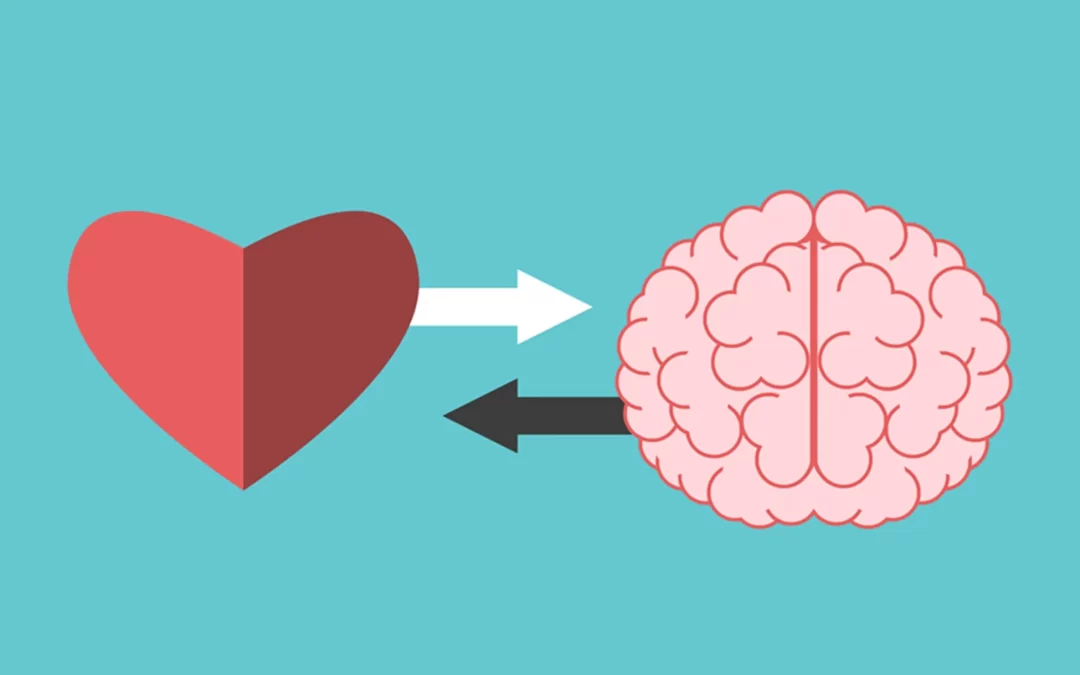
For most people, especially Christians, this “spearing of emotions” seems like the worst possible scenario. Additionally, many Christians seem to assume that the opposite extreme is actually a healthy emotional response: “stuffing our feelings”—over-controlled repression of our feelings. Such is not the case.

Emotional Stoics Versus Emotional Poets

God calls us to be emotional “poets.” We are to manage our moods the way the psalmists did— facing our feelings face-to-face with God and soothing our soul in our Savior.

Instead of being passionate poets like the psalmists, we become apathetic stoics. We try to live without pathos, without passion and feeling. Mr. Spock of Star Trek fame was a stoic. He tried to repress his emotions, deny them, if he could, eradicate them.

It’s easy to understand stoicism’s attraction. Hatred, despair, and terror are not exactly the most attractive experiences. When they sweep over us, we flee them like an invading army.

We can understand stoics by contrasting them with poets. What should biblical poets do with their anger, hatred, and rage?

1. Option One: Acknowledging Our Moods or Trying to Eradicate Our Moods

We should not try to eradicate our feelings. Paul tells us to be angry but sin not; he does not tell us never to be angry (Ephesians 4:26). Emotional poets acknowledge their moods to themselves (candor) and to God (lament).

Psalm 73 is a classic expression of a believer’s struggle to comprehend and control his envy, jealousy, and hatred. Asaph is dismayed that a good God could allow bad things to happen to good people and good things happen to bad people. He faces his envy coram Deo (face-to-face with God) telling God all about it. He doesn’t wait to be rid of his envy before he dares enter his Father’s presence. He takes himself, all that he is, including his envy, to God.

Stoics, on the other hand, try to eradicate their hatred. “If I don’t think about it, it’s not there. If I repress it, it will go away.” They choose denial over candor and lament.

2. Option Two: Seeing Our Feelings with Spiritual Eyes or with Eyeballs Only

As emotional poets, God wants us to explore our moods with spiritual eyes. Asaph enters the presence of God to gain perspective on his perspective. “When I tried to understand all this, it was oppressive to me till I entered the sanctuary of God; then I understood their final destiny” (Psalm 73:16-17). God calls us to view our external situation and our internal moods from His eternal perspective.

Those who repress their moods try the opposite approach. When a mood doesn’t vanish, they mull it over and over and over again with eyeballs only—from a worldly perspective. Asaph was once trapped there, seeing only the prosperity of the wicked. We’re doomed to defeat whenever we look at our situations and our feelings only from a temporal perspective.

3. Option Three: Confessing My Sinful Anger or Playing the Pharisee with My Sinful Anger

Third, emotional poets confess their sinful anger to Father. “When my heart was grieved and my spirit embittered, I was senseless and ignorant; I was a brute beast before you” (Psalm 73:21-22).

Of course, not all anger is sinful. But sinful anger—anger that is self-centered and self-protective, anger that pushes us away from God and others—we confess that anger.

Stoics, on the other hand, don’t confess their mismanaged moods to God. They don’t believe that they could come to God unless they perfectly, serenely suppress their rage. They play the emotional Pharisee—trying to deal with their emotions through the flesh, through works, and through self-sufficiency.

4. Option Four: Facing Feelings with Grace or with Works

Fourth, poets receive grace. “Yet I am always with you; you hold me by my right hand” (Psalm 73:23).

Not so the emotional stoic. In self-righteousness, they never receive grace. They think, “Why do I need grace? I manage quite well on my own.”

5. Option Five: Choosing God-Sufficiency or Self-Sufficiency

Fifth, poets recognize that only God is enough. “Whom have I in heaven but you, and earth has nothing I desire besides you” (Psalm 73:25). Godly emotional poets choose God-sufficiency.

Emotional stoics choose self-sufficiency by denying and attempting to repress their feelings.

Why? Facing moods forces us to face our insufficiency. Nothing makes us feel punier than being overwhelmed by feelings. No one wants to hear the derogatory comment, “He’s so moody.” “She’s so emotional!”

When feelings overpower us we feel powerless, impotent. In our flesh, we would rather stuff our moods, would rather survive self-sufficiently, than admit that we need help managing our moods.

That’s why stuffing our feelings is sinful—it is a work’s orientation. It displays a self-sufficient denial of our need for God. Though more subtle than out-of-control expression (spearing) of our feelings, suppression is equally sinful.

The Rest of the Story

We’ve explored mood order—how God designed our emotions to function. And we’ve probed mood disorder—how sin mars God’s design for our moods. We never want to stop at sin. Where sin abounds, grace super-abounds (Romans 5:20). In our upcoming posts, we begin to discuss mood reorder—how does our salvation in Christ bring wholeness and holiness to our emotions?

Join the Conversation

How surprised are you that repressing, suppressing, and stuffing our feelings is just as harmful and sinful as using our feelings as spears?


Share


Tags: , ,

Emotions Gone Bad and Mad

Wednesday, March 9th, 2011

Emotional Intelligence: The ABCs of Emotions

Part 8: Emotions Gone Bad and Mad

Introduction: You’re reading Part 8 in a blog mini-series on Emotional Intelligence. Read Part 1: Emotions: God’s Idea, Part 2: Why We Feel What We Feel, Part 3: Good News about Good Moods, Part 4: What Went Wrong?, Part 5: Our Emotions and Our Bodies, Part 6: How’s Your EI?, and Part 7: Become an Emotional Mentor. I’ve developed this series from material in my book Soul Physicians.

Mood Disorder: Emotions Gone Mad

So far in our blog series on emotional intelligence, we’ve focused on how God designed us as emotional beings. We’ve called this “Mood Order.”

However, we’d be quite naïve to imagine that our emotions and moods are always well-ordered. Because of our fall into sin, we’re not the way we’re supposed to be—we are depraved and disordered. For emotions, we call this “Mood Disorder.”

In Ephesians 4:19, Paul chooses a very rare Greek word, apēlgēkotes, to describe mood disorder. The word literally means “past feeling.” We cease to feel and care. Tired of feeling, we shut ourselves down to the messages that pain sends. As a result, we lack emotional intelligence, sensitivity, and awareness.

Designed to be responsive to the world, others, and God, we close ourselves off. We think we’re too smart to smart anymore. In our folly, we decide that hurt is too painful, even if reflecting on hurt enhances our relationships. We become obtuse to emotional messages—emotionally dense, relationally stunted.

Refusing to Need God: Emotions Gone Bad

What is the essence of fallen emotionality? Instead of using emotions to experience deeply the life God grants us, we misuse our emotions to forget the pain in our soul and the sin in our heart. We pursue whatever pleases us for a season. We live as if this world is all there is.

We also pursue whatever pleases us for a reason. We live to survive, to make it somehow—without God. You see, facing our feelings force us to face the fact that we must live face-to-face with God to survive.

In our refusal to depend upon God, we pinball between two self-centered, self-sufficient emotional survival modes.

• Out-of-Control Emotional Expression

• Over-Controlled Emotional Repression

Both styles share the refusal to listen well to our emotions, the refusal to use our emotionality to evaluate where we are spiritually. We refuse to face our feelings because we refuse to need God.

Using Our Feelings as Spears: Out-of-Control Emotional Expression

Paul further describes sinful emotions in Ephesians 4:19 as “giving themselves over to sensuality.” We’re ungoverned. Out of control. We’ve taken the brakes off our emotions.

We decide that we want nothing to do with managed moods. If we feel it; we express it. If it hurts others; so be it.

Consider King Saul. He massaged his jealousy toward David. When the women of Israel met Saul and David with dancing and song, they sang, “Saul has slain his thousands, and David his tens of thousands” (1 Samuel 18:7). Saul was enraged. This refrain galled him. “And from that time on Saul kept a jealous eye on David” (1 Samuel 18:9).

Caressed anger leads to expressed anger.

“Saul had a spear in his hand and he hurled it, saying to himself, ‘I’ll pin David to the wall’” (1 Samuel 18:10b-11a). Saul perfectly pictures imperfect, sinful emotions—we use our feelings as spears to hurt others.

Like all unmanaged moods, Saul’s resulted from a foolish internal evaluation of a difficult external situation. No doubt it would be emotionally distressing for most leaders to hear subordinates praised to the extent people praised David.

Experiencing this, Saul kept thinking to himself, rather than talking to God. “They have credited David with tens of thousands,” he thought, “but me with only thousands. What more can he get but the kingdom?” (1 Samuel 18:8b).

Saul catastrophized. Imagining God to be a Hoarder, Saul could not imagine that there was enough respect and responsibility to go around for both David and himself. This town was not big enough for the both of them because God was not big enough for Saul.

Emotional sensationalists wear their emotions on their sleeves and hurl their feelings like a spear. They will not be controlled. They refuse to be inhibited. Their feelings become their god.

Yet, their feelings never direct them to God. They may feel their feelings, indulge their feelings, but they never engage their feelings, never use their mood states to detect their spiritual state.

And Us?

I know. We’re all thinking about people—other people. People who have treated us like this.

But what about us? Am I, are you, are we ever guilty of indulging our feelings? Do we ever use our feelings as spears to harm others? Do we refuse to face our feelings face-to-face with God?

The Rest of the Story

Some may wonder, “Well, yes, I do this—so how do I cling to God so I can change?” Great, honest question. We’ll address that later in our series.

Others may say, “Well, that’s not my style. I do the opposite. I stuff my feelings.” In our next post, we’ll examine that mood disorder in: Why Stuffing Our Feelings Is Sinful.

Join the Conversation

If you’ve used your emotions as a spear to harm others, what is God’s Word calling you to do?


Share


Tags: , ,

How’s Your Emotional Intelligence?

Monday, March 7th, 2011

Emotional Intelligence: The ABCs of Emotions

Part 6: How’s Your Emotional Intelligence? 

Introduction: You’re reading Part 6 in a blog mini-series on Emotional Intelligence. Read Part 1: Emotions: God’s Idea, Part 2: Why We Feel What We Feel, Part 3: Good News about Good Moods, Part 4: What Went Wrong?, and Part 5: Our Emotions and Our Bodies. I’ve developed this series from material in my book Soul Physicians.

IQ or EQ?

People talk a lot about IQ—Intelligence Quotient. However, we all know that “book smarts” and “people smarts” are two different skills. Today, we’ll summarize and apply what we’ve said so far about emotions by taking an Emotional Intelligence Test.

What’s Your EQ?

Evaluate yourself using 10 as “Emotionally Mature” and 1 as “Emotionally Immature.”

1. I’m aware of my feelings and moods as they occur.

2. I’m able to recognize and name my feelings and moods.

3. I’m able to understand the causes of my feelings and moods.

4. I maintain a sense of ongoing attention to my internal mood states.

5. I’m aware both of my mood and my thoughts about my mood.

6. I actively monitor my moods as the first step in gaining control of them.

7. I soothe my soul in God—I candidly take my feelings and mood to Christ.

8. I have a sense of self-mastery—frustration tolerance and anger management.

9. I self-regulate my emotions—self-control.

10. I can harness my emotions in the service of a godly goal.

11. I can stifle my impulses (“passions of the flesh”) and delay gratification.

12. I’m a hopeful person.

13. I turn setbacks into comebacks.

14. I’m resilient and longsuffering. I demonstrate perseverance.

15. I practice Christ-centered hopefulness: “I can do all things in Christ who strengthens me.” “I can meet challenges as they arise.” “I’m competent in Christ.”

16. I’m learning contentment in whatever state I’m in (external situation or internal mood).

17. I’m attuned to others, not emotionally tone-deaf. I have the ability to sense another’s mood.

18. I have empathy built on self-awareness. I’m open to my own emotions and, therefore, skilled in reading the feelings of others.

19. I practice the creative ability of perceiving the subjective experiences of others.

20. I make another person’s pain my own.

21. I can take on the perspective of another person.

22. I forgive.

23. I’m emotionally nourishing toward others.

24. I leave others in a good mood.

25. I’m effective in interpersonal relationships.

26. I help others to soothe their souls in their Savior.

27. I can initiate and coordinate the efforts of a group of people—helping them to move with synchrony and harmony.

28. I can negotiate solutions—mediation, preventing or resolving conflicts.

29. I can make personal connection—ease of entry into an encounter along with the ability to recognize and respond fittingly to people’s feelings/concerns.

30. I’m a good team player.

31. I’m skilled at social analysis—being able to detect and have insights into people’s feelings, motives, and concerns. Ease of intimacy and rapport.

The Rest of the Story

Today we focus on personal application. In our next post, we focus on ministry application. Read all about it in Helping Others with Their Emotions.

Join the Conversation

So, how’d you do? How’s your EQ or EI? What biblical principles could you follow to grow in emotional areas where you are currently not quite as mature?


Share


Tags: , , ,

Dust and Divinity: Our Bodies and Our Emotions

Saturday, March 5th, 2011

Emotional Intelligence: The ABCs of Emotions

Part 5: Dust and Divinity: Our Bodies and Our Emotions

Introduction: You’re reading Part 5 in a blog mini-series on Emotional Intelligence. Read Part 1: Emotions: God’s Idea, Part 2: Why We Feel What We Feel, Part 3: Good News about Good Moods, and Part 4: What Went Wrong? I’ve developed this series from material in my book Soul Physicians.

A Defining Question

In a recent CCEF Ask the Counselor video, biblical counselor David Powlison addressed the question, “Do you believe that there is a biological basis for depression which may endure, despite the fact that heart issues have been successfully addressed through biblical counseling? If so, is there a place for long-term use of medication?”

In his nuanced, loving, balanced response, Dr. Powlison noted that, “this is one of the defining questions of our age.” Listen to David’s full response at Is Depression Purely Biological?

A 1,000-word blog post can never provide the final word on this defining issue. Instead, consider these words simply an introduction to the Bible’s teaching on the complex inner-working of our body/soul, brain/mind connection.

Jars of Clay

In the beginning, God designed us as body-soul beings. “The LORD God formed the man from the dust of the ground and breathed into his nostrils the breath of life, and the man became a living being” (Genesis 2:7). Even before the fall, we were more than inner person—we were and are embodied beings.

Our bodies are works of art fashioned by our heavenly Father who fearfully and wonderfully handcrafted us (Psalm 139:13-16). We are works of God’s hand; made, shaped, molded, clothed with skin and flesh, and knit together with bones and sinews (Job 10:3-12). We are not to despise our physicality.

After the fall, the Bible teaches that we inhabit fallen bodies in a fallen world (Romans 8:18-25). Paul calls our fallen bodies “jars of clay” (2 Corinthians 4:7). As one commentator has mused, we are cracked pots! Paul also describes our bodies as a mortal earthly tent—perishable, weak, flesh and blood (1 Corinthians 15:42-47).

Paul is not saying that the flesh is bad or evil. He is saying that our bodies are weak and natural, prone in our fallen state to disorder and dysfunction.

Some modern Christians seem to take a hyper-spiritual approach to the brain/mind issue. They act as if inner spirituality eliminates all the effects of outer bodily maladies. Some seem to imply that giving any credence to the fallen bodies influence on our emotional state is something of a Trojan Horse that sneaks secular, materialistic thought into Christian spirituality.

Not So the Puritans

The Puritans would have been shocked by such a naïve perspective on the mind-body issue. Puritan pastors and theologians like Robert Burton, William Ames, and Jonathan Edwards recognized that problems such as scrupulosity (what we might call OCD) and melancholy (what we might call depression) might, at least in part, be rooted in the fallen body. They warned that such maladies sometimes could not be cured simply by comforting words or biblical persuasion (see A History of Pastoral Care in America, pp. 60-72).

Edwards described his sense of pastoral helplessness in the face of the melancholy of his uncle, Joseph Hawley. He noted that Hawley was “in a great measure past a capacity of receiving advice, or being reasoned with” (see A History of Pastoral Care in America, p. 73). Eventually, Hawley took his own life one Sabbath morning. Shortly thereafter, Edwards advised clergy against the assumption that spiritual issues alone were at work in melancholy.

Emotions: Bridging Our Inner and Outer Worlds

Emotions truly are a bridge between our inner and outer world. Think of the word “feeling.” Feeling is a tactile word suggesting something that is tangible, physical, touchable, and palpable. “I feel the keyboard as I type. I feel the soft comfortable chair beneath me. I feel my sore back and stiff wrists as they cry out, “Give it a rest!”

We also use this physical word—feeling—to express emotions. “I feel sad. I feel happy. I feel joy. I feel anger.” It’s no surprise that we use this one word in these two ways—physical and emotional. We know what the Israelites understood—our body feels physically what our emotions feel metaphysically (see my Th.M. thesis Hebrew Anthropological Terms as a Foundation for a Biblical Counseling Model of Humanity).

When I’m nervous, my stomach is upset. When I feel deep love, my chest tightens. When I’m anxious, my heart races. When I’m sad, my entire system slows.

We know much more about the brain than the Israelites knew. It is a physical organ of the body and all physical organs in a fallen world in unglorified bodies can malfunction. My heart, liver, and kidneys can all become diseased, sick. So can the physical organ we call the brain.

Embracing our Weakness/Embracing God’s Power

It is important to realize that every emotion involves a complex interaction between body and soul. Therefore, it is dangerous to assume that all emotional struggles can be changed by strictly “spiritual means.”

For some, spirituality includes embracing physical weakness. In fact, this is the exact message Paul communicates when he calls us “jars of clay.” Why does God allow us to experience physical weakness? “To show that this all-surpassing power is from God and not from us” (2 Corinthians 4:7). It’s the same message Paul personally experienced in his own situational suffering (2 Corinthians 1:8-9) and in his own bodily suffering (2 Corinthians 12:7-10).

We can act as if we are more spiritual than the Apostle Paul. However, in actuality, pretending that our external suffering and our physical bodies do not impact us emotionally involves an arrogant refusal to depend upon and cling to Christ alone.

Certain emotions, especially anxiety and depression, involve physiological components that sometimes may need to be treated with medication. When we ignore the importance of the body, we misunderstand what it means to trust God. It is wrong to place extra burdens on those who suffer emotionally by suggesting that all they need to do is surrender to God to make their struggles go away. 

On the other hand, it would be equally wrong to suggest that medication is all someone needs. That would be like a pastor entering the cancer ward to talk with a parishioner who was just told that she has cancer. “Well, take your medicine. Do chemo. You’ll be fine. See ya’ later.” No! That pastor would support, comfort, talk with, and pray for his parishioner.

Sickness and suffering are always a battleground between Satan and Christ. So, while medicine may sometimes be indicated for certain people with certain emotional battles, spiritual friendship is always indicated. Physicians of the body (and the brain is an organ of the physical body) prescribe medication. Physicians of the soul (and the mind is an inner capacity and reality of the soul) prescribe grace.

The Rest of the Story

So how’s your EQ—your Emotional Quotient? In our next post, we’ll summarize and apply what we’ve said so far by presenting an EI Test: an Emotional Intelligence Test.

Join the Conversation

I know today’s post is controversial. What’s your take? Where do you stand on the issue of causes and cures for emotional distress? Does the body potentially play a role? Is medicine ever part of God’s ordained treatment?


Share


Tags: , , ,

Emotions: What Went Wrong?

Thursday, March 3rd, 2011

Emotional Intelligence: The ABCs of Emotions

Part 4: Emotions: What Went Wrong?

Introduction: You’re reading Part 4 in a blog mini-series on Emotional Intelligence. Read Part 1: Emotions: God’s Idea, Part 2: Why We Feel What We Feel, and Part 3: Good News about Good Moods. I’ve developed this series from material in my book Soul Physicians.

Mood Bent Out of Shape: Mood Disorder

Separated from the life of God, we demand that we become like gods for one another. When our fellow finite beings fail us, then we face personal dis-integration. We’re shamefully exposed as false trusters. Thus, all disorder ultimately arises from a state of disconnection. The emotional result is disordered moods:

• My inability to accurately sense and experience my own inner and outer world and my failure to maintain a healthy self-awareness of my prevailing emotional mood state(s).

• My inability to accurately read my emotional thermostat so that I inaccurately gauge the relational temperature outside and my personal temperature inside.

• My inability to respond to my inner and outer world courageously, lovingly, and wisely.

In mood order, we perceive unpleasant or distressful moods as messages sent from the soul to the body (from the mind to the brain). The message is communicating: “Necessary changes requested. Please reply ASAP! Thank you.”

The symptom (the distressed mood) is thus seen as a potential gift. It is like the warning light in our cars reminding us to “check under the hood.”

In mood disorder, we misperceive our distressed mood and respond in non-God ways. We attempt to manage our misperceived moods self-sufficiently. (Later in this blog mini-series, we’ll explore more about mismanaged moods.)

Mood Reshaped by Christ: Mood Reorder

Satan wants our moods to overwhelm us, control us, and direct us away from God. Or, at least he wants us to respond to them by entering survival mode.

Remember this principle. Overwhelming moods lead to survival mode.

Jesus came to give us life, and that abundantly (perisson). “Abundant” means beyond what is necessary, surplus, left over, greatly enlarged. It is used of the abundance left over after the feeding of the 5,000. Spoiling! Jesus came to spoil us.

Resurrection power allows us to do more than survive. We can thrive (2 Corinthians 1:3-11; Philippians 3:7-15). We can move from anger to love, from despair to hope, and from fear to faith. Resurrection power offers fresh, creative energy, and a reawakening of courage—of mood. As Paul Tournier insightfully describes it:

“The person matures, develops, becomes more creative, not because of the deprivation in itself, but through his own active response to misfortune, through the struggle to come to terms with it and morally to overcome it—even if in spite of everything there is not cure . . . Events give us pain or joy, but our growth is determined by our personal response to both, by our inner attitude” (Tournier, Creative Suffering, pp. 28-29).

Remember this principle. In reordered, redeemed moods, intense moods lead to a thriving mode.

Later in this blog mini-series, we’ll learn more about managing our moods. Here’s my desire now: recognize how marvelous moods can be when managed in Christ and recognize how pernicious they can be when mismanaged under Satan. Appreciate your moods as God-given sources of instant insight into your inner and outer world. Enjoy the usefulness of reordered moods in a disjointed world, which include:

• My God-given ability to become aware of my moods, whether pleasant or unpleasant, and to accept that I am experiencing that mood.

• My God-given ability to face and feel whatever mood I am experiencing, allowing it to grant me insight into my inner self and my external situation.

• My God-given ability to bring rationality to my emotionality by coming to understand the sources of my moods and my resources to manage my moods (responding to my inner and outer world wisely).

• My God-given ability to bring volitionality to my emotionality by choosing how I will manage my moods instead of allowing them to manage me (responding to my inner and outer world courageously).

• My God-given ability to bring relationality to my emotionality by allowing my moods to motivate me toward deeper connection or reconnection with God, others, and myself (responding to my inner and outer world lovingly).

The Rest of the Story

So, all we need to do is work on our inner life and all “negative” emotions will flee? No, there’s more to it. There are other components involved, including our physical body. In our next post, Dust and Divinity, we briefly explore the connection between our bodies (we are physical beings) and our feelings (we are emotional beings).

Join the Conversation

Reread the five bullet points under reordered moods. Select at least one and ponder how you might apply that principle to a current emotional issue you are facing/feeling.


Share


Tags: , , , ,

Good News about Good Moods

Wednesday, March 2nd, 2011

Emotional Intelligence: The ABCs of Emotions

Part 3: Good News about Good Moods 

Introduction: You’re reading Part 3 in a blog mini-series on Emotional Intelligence. Read Part 1: Emotions: God’s Idea and Part 2: Why We Feel What We Feel. I’ve developed this series from material in my book Soul Physicians.

How God Designed Our Moods to Work: Mood Order

We tend to develop rather patterned approaches to life. Relationally, we pursue affections that motivate our actions (Psalm 42:1-2). We cling to our Creator or to created realities—pure or impure affections, lovers of the soul or idols of the heart. Either we worship God our Spring of Living Water, or we dig broken cisterns that can hold no water. We enjoy intimacy with Christ or we weary ourselves pursuing false lovers.

Rationally, we develop mindsets that persist over time (Romans 12:1-2). Either we direct our lives according to the mindset of the spirit/Spirit or we pilot our lives off course according to the mindset of the flesh. Either we guide our lives along the narrow path of wisdom or along the broad road of foolishness.

Volitionally (our will), we develop purposeful pathways of intentional interacting (Joshua 24:15). We trod a path toward what we perceive will satisfy the hunger of our heart. We habituate ourselves either toward willing God’s will or willing our own will. “Your will be done,” or “My will be done.”

Emotions are no exception. We not only experience instantaneous emotional responses, we also encounter ongoing mood states. A mood is a background feeling or emotional state that persists over time. It is less intense and longer lasting than emotions. My mood is my prevailing tone or coloring, my state of mind, frame of mind. In a sense, it is my emotional outlook that occurs both at a particular time and settles deep inside me over time.

As with emotions, moods are the intersection of our emotional/feeling responses and our rational attitude/perceptions. My mood reacts both to the external events of my life and to the internal longings, images, ideas, goals, and actions of my soul.

Created by God, moods, like emotions, were a very good thing. Our heavenly Father intricately fashioned His image bearers to experience a variety of positive emotional states, the most optimal moods. Our moods and emotions have a purposeful function or they would not exist.

Emotions and moods contain vital signals of readiness not simply for action, but for interaction, and rest from interaction. They signal when we need to interact and when we need to come apart (before we fall apart). Jesus identified within Himself moods that led him to seek solitude (Mark 1:45; Luke 5:16) and that led Him to engage in intimate interaction (Luke 5:15; Mark 3:1-6).

Our moods guide us to mobilize our resources for wise relating. They work with our self-awareness so that we can become attentive to our emotional states as our inner person interacts with our outer world. Moods motivate, or better, moods jolt us into awareness, promote pondering, and motivate us toward appropriate interaction. Taken together, we can define mood order as:

• My God-given ability to feel my own feelings, to sense my own life experiences, and to become self-aware of my prevailing emotional mood state(s).

• My God-given thermostat that quickly gauges the relational temperature outside and my personal temperature inside.

• My God-given capacity to courageously, lovingly, and wisely respond to my inner and outer world. I perceive what I feel and I choose how I respond.

Moods in the Garden

What was the mood process like for Adam and Eve? All order ultimately arises from connection. So when Adam felt happiness and joy in the presence of Eve, his entire being became focused on connecting, attaching. “I like being with her. I want to be with her. When we are together, I am outrageously happy.”

Sinless Adam and Eve also could have experienced legitimate sadness—a sadness due to absence that impelled them to reconnect. Adam is working in one part of the Garden. Eve in another. Happy in her work, but aware of a growing sense of sadness, of a developing mood of aloneness, Eve stops. She ponders. She recognizes the source—she misses her hubby. She runs to him, throws her arms around him, kisses him impetuously. “Just wanted you to know how much I missed you!”

Separation, whether physical or psychological, is a basic cause of human sadness. Sadness provides a driving force to restore attachment, in the same way that hunger impels us to eat.

This ancient, biblical sense of mood corresponds to how other pre-modern people understood mood. Before AD 900 in Middle English, mood meant “spirit, courage, mind.” In the Old Saxon, mood meant “courage and spirit.” Mood had a very positive connotation. It was always correlated with courage, movement, spirit, aliveness, passion, and energy.

That’s so different from our modern or post-modern thinking. “He’s so moody!” “She’s in such a mood!” That could be a dynamic compliment, depending on the nature of the mood.

The Rest of the Story

Talking about “mood order” is “fun.” However, we would be naïve to stop here. We all know and experience the “disordering of our emotions and moods.” So in our next post we’ll explore Emotions: What Went Wrong?

Join the Conversation

How could you use this good news about good moods to enjoy and benefit from your emotions and moods, rather than fearing and fleeing them? What legitimate mood could you enjoy right now?


Share


Tags: , , , ,