Archive for the 'Jay Adams' Category

Jay Adams Is Deep and Compassionate

Friday, January 27th, 2012

Jay Adams Is Deep and Compassionate

My two-hour flight home from two days of team meetings at Capital Bible Seminary provided some time for reflection. In particular, I pondered Jay Adams’ nouthetic counseling model. 

Here’s a summary of my “second look” at Adams.

Jay Adams Was/Is a Model Builder and a Movement Builder 

While the Puritans were great builders of soul care and shepherding models, since their day few Christians have developed, from scratch, a biblically-based approach to people, problems, and solutions. Adams has done so…from scratch, not building on other current models, but building on God’s Word.

Whether or not you agree with Jay Adams’ model is not my point. My point is to affirm the facts: who else in Christian circles in the past fifty years has independently built a unique, new, fresh, comprehensive approach to counseling?

Add to that…a model that became a sustained “movement.” The “biblical counseling movement” is now entering its third generation. It has grown, changed, and developed as Powlison’s book and Lambert’s book indicate. But it traces its roots to Jay Adams.

I try to imagine what it must have been like to be starting from scratch in the early 70s. Counseling every day, studying Scripture, applying truth to the lives of hurting and hardened parishioners, teaching others, writing books, and shepherding a growing movement. Again, disagree with “the movement” if you want to, but let’s give Jay Adams credit for the massive work of building a fresh model and a sustained movement while pastoring/shepherding/counseling real folks with real life issues.

Jay Adams Was/Is a Comprehensive Theorizer 

While the Puritans were great soul physicians developing theological manuals about the soul, since their day few Christians have developed a counseling/shepherding/pastoring-focused theological and practical manual. Adams has.

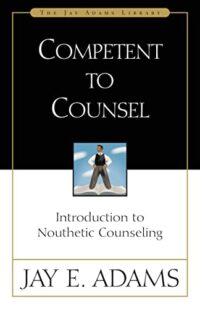
Yes, many today are penning “Christian counseling” and “biblical counseling” books. But few seek to provide a comprehensive theology/theory of people, problems, and solutions. Adams did throughout his writings, and particularly with A Theology of Christian Counseling: More Than Redemption, The Christian Counselor’s Manual, and Competent to Counsel.

In the past fifty years a few others have sought to develop a comprehensive theory of Christian/biblical counseling: Larry Crabb with Understanding People and his other writings, Eric Johnson with Foundations of Soul Care, myself with Soul Physicians and Spiritual Friends. While these authors vary greatly from one another, they have in common writing not only about particular counseling issues and practical counseling methods, but seeking to develop a comprehensive Christian theory. Adams paved the way.

Like or dislike his theory/model, but don’t call him shallow. Disagree with him at specific points if you decide to, but do it engaging his actual (copious) writings, not as a broad brush stroke: “He’s not deep,” or “He’s too ________.” It’s easy to make those charges about anyone…in the abstract…

Here’s one specific example. Some claim that Adams’ “dehabituation and rehabituation” model is shallow and behavioral. Anyone saying that should read Kent Dunnington’s Addiction and Virtue. While I suspect that Adams might disagree with a decent amount of Dunnington’s book, nonetheless, the book demonstrates that “habit” is a deeply theological and philosophical construct with literally 1,000s of years of history behind it.

Dunnington builds a sophisticated case that habit is anything but “behavioralistic.” Habit, rightly understood, as Adams did, is about motivations of the heart—how they are structured, deconstructed, and reconstructed. Again, disagree with Adams “take” on “habituation” if you wish, but at least engage the depth of his insights with specific reasons for disagreement…

Jay Adams Was/Is a Rare Combination: A Theologian/Practitioner 

I’ve already “hinted at” this category. Jay was doing all of this “theological theorizing” while pastoring, shepherding, discipling, and equipping. His in-depth thinking about the Bible’s truth about people, problems, and solutions was never done as some “ivory tower academic.” It was never uncoupled from the real life struggles that parishioners and counselees were bringing to him daily.

Fifty years later, we have some folks who are good writers of theory/theology of biblical/Christian counseling. Some who are good writers of practice/methodology of biblical/Christian counseling. Some who are good counselors-practitioners. Few combine all these talents.

Agree or disagree with Jay, but let’s give him his due. He was/is that rare combination of theologian/practitioner, thinker/doer, visionary/movement builder.

Jays Adams Was/Is Compassionate 

This header, perhaps more than others, may be met by some with dismay and statements like: “But Jay and nouthetic counseling are all about harsh confrontation!” First, that in itself is an inaccurate and unfair caricature.

Second, while Jay’s writing and counseling style may not be as “warm and fuzzy” and “empathetic” as some of us may prefer, that’s different from assessing his level of heart compassion. Think about one of Jay’s basic definitions of nouthetic counseling: to confront out of concern for change.

Real people were coming to Jay. They had been to “secular counselors” and their problems in living were not being addressed effectively and biblically. They had been to their pastors who either provided warmed-over secular therapy or admitted that they had no training in pastoral care.

These hurting, struggling folks were coming to Jay with their besetting sins. He strove to help them biblically to change for good. By “for good,” I’m implying both: a.) for the long term, and b.) for good and godly motivation: for God’s glory and so they could minister more effectively in the lives of others.

People were stuck in their sins and Jay wanted to turn to the Bible to help people change. That strikes me as compassionate.

Pastors sensed that they lacked competence to help their hurting parishioners. Ministers lacked confidence in the Bible’s ability to address the real life issues their sheep were struggling against. Jay sought to help pastors, in particular, to regain their confidence in God’s Word and to develop competence in using God’s Word to help their flock. That strikes me as compassionate.

What’s Up with Bob?

Some may be wondering, “What’s up with you, Bob? When did you become Jay Adams’ ‘apologist’?” I’m not anyone’s apologist. Jay Adams does not need me to “defend” him. I’m simply sharing some reflections from 36 hours ago at 36,000 feet.

Others may be wondering, “Who are you targeting with this blog post? Who are you taking shots at?”

No one.

Well, if anyone, perhaps myself.

Perhaps in taking “a second look,” I am doing some “nouthetic self-confrontation” regarding my past level of appreciation for Jay Adams as a model builder, movement builder, comprehensive theorizer, theologian/practitioner, and compassionate care-giver.

If that same shoe fits for you, then you can choose to wear it also.

My “model” and my “style” still are not identical to Jay’s nouthetic counseling. However, that doesn’t mean that I can’t deeply appreciate and respect who he is in Christ and what he has done for the Body of Christ through Christ’s grace.

Join the Conversation 

What do you think? Is Jay Adams deep and compassionate?

RPM Ministries: Equipping You to Change Lives with Christ’s Changeless Truth

Tags: , , , ,

Five to Live By

Friday, January 20th, 2012

Five to Live By

Linking you to the top 5 Christian blog posts of the week—posts that provide robust, rich, and relevant insights for living. 

The Biblical Counseling Movement After Adams 

Heath Lambert’s new book The Biblical Counseling Movement After Adams, has created something of a “stir.” Here are links to several reviews. Greg Wilson, Jay Younts at the Association of Biblical Counselors, Donn Arms at the Institute for Nouthetic Studies, and myself at The Gospel Coalition.

To Spank or Not to Spank?

Denny Burk responds to Christianity Today’s editorial against spanking in CT Goes on the Record against Spanking

Learning (Good and Bad) from Job’s Counselors

Pastor Paul Tautges’ Counseling One Another is always a “can’t miss” blog. Every post is valuable. Today I link you to a two part series on learning (good and bad) from Job’s counselors. Part One: How to Be a Miserable Counselor. Part Two: The Comforting Power of Quiet Presence

Self-Esteem Is Out 

It’s not often that I link you to the Washington Post, but today I’ll make an exception. Read this fascinating article on how educators are moving away from a (failed) generation of “self-esteem.” It’s a clunky title, but a good article: In Schools, Self-esteem Boosting Is Losing Favor to Rigor, Finer-tuned Praise

20 Words of Wisdom for Theologians

Even if you don’t consider yourself a “theologian,” and even if the very word “theology” terrifies you, this two-part post by Nate Claiborne is well worth ready. Nate summaries 20 lessons that theologian John Frame believes young theologians would be wise to learn. Read Part One and Part Two

Join the Conversation

Which post impacted you the most? Why? What blog posts have you enjoyed this week that you want to share with others?

RPM Ministries: Equipping You to Change Lives with Christ’s Changeless Truth

Tags: , , , ,

Five to Live By

Thursday, July 14th, 2011

Five to Live By

Linking you to the top 5 Christian blog posts of the week—posts that provide robust, rich, and relevant insights for living.

How Do You Respond to Disappointment?

Jay Adams pens a candid, powerful prayer simply titled Disappointment

How Do You Use God’s Word to Minister to the Suffering?

Paul Tautges has begun a four-part series on counseling one another in times of suffering: Reasons to Counsel from Lamentations.

How Do You Give Thanks in Everything?

Margaret Ashmore blogs for the Association of Biblical Counselors. In this post she encourages us to live a life of thankfulness: Gratitude: The Language of Heaven.

How Do You Change from a Whiner to a Worshipper?

Scott Smith pens a Prayer for Whining Times

How Do You Minister to Those Who Hate You?

How is a pastor to minister to people in his church who hate him? Brian Croft asks and begins to answer that difficult, real-life question in: Is a Pastor To Shepherd Those Who Despise Him in His Church?

Join the Conversation 

Which post impacted you the most? Why? What blog posts have you enjoyed this week that you want to share with others?

Tags: , , ,

Five to Live By

Saturday, May 7th, 2011

Five to Live By 

Linking you to the top 5 Christian blog posts of the week—posts that provide robust, rich, and relevant insights for living.

Mother’s Day: Be Very Sensitive

Justin Taylor links you to several important posts about Mother’s Day—and our need to be very sensitive. In wanting to honor Moms, our churches often are insensitive to those women for whom Mother’s Day may be a very difficult day. Read with insight and act with compassion: Infertility and Mother’s Day.

A Dirty Word List?

Ed Welch is one of my favorite biblical counseling bloggers. I appreciate his candor, as in this post about our dirty word list in biblical counseling. Read all about it in Biblical Counseling Dirty Words.

Incompetent to Counsel

You know that it’s rare for me to list one of my own posts. Well, technically I’m not doing that. Instead I’m listing a post from the Biblical Counseling Coalition’s new blog site, Grace & Truth. I just happen to be one of the first week’s blogger. Read my post on finding strength in weakness (and all the others): Competent in Christ.

A Prayer by Jay Adams

Jay Adams, the founder of Nouthetic Counseling, posted a moving, candid prayer that is a great reminder to all of us, regardless of our age. Read and learn from Jay’s wisdom in Age.

Daddy Takes the Bee Sting for Us

My good friend, Pastor Steve DeWitt, shares a stirring illustration of the bee sting in The Sting Removed.

Join the Conversation

Which post impacted you the most? Why? What blog posts have you enjoyed this week that you want to share with others?

Tags: , , , ,

The Biblical Counseling Movement: History and Context

Monday, April 19th, 2010

The Biblical Counseling Movement: History and Context

Book Details

• Author: David A. Powlison, Ph.D.

• Publisher: New Growth Press (February 2010)

• Category: Biblical Counseling, Church History

• ISBN: 9781935273134

• Retail Price: $39.99

• Review Source: This review first appeared at TGC Review at The Biblical Counseling Movement.

• Purchase: At Amazon.com

Reviewer: Bob Kellemen, Ph.D., LCPC, is the Founder and CEO of RPM Ministries. Bob has pastored three churches, chaired the MA in Christian Counseling and Discipleship department at Capital Bible Seminary, and is the author of five books: Soul Physicians, Spiritual Friends, Beyond the Suffering, Sacred Friendships, and God’s Healing for Life’s Losses.

Recommended: Dr. David Powlison of the CCEF unites the twin themes of biblical counseling and church history in his excellent work The Biblical Counseling Movement: History and Context. Everyone interested in the modern biblical counseling movement will benefit from this well-researched and well-written book. It presents a fair and balanced exploration of one of the most important developments in the Evangelical church over the past generation. Readers will be equipped not only with historical insight, but more importantly, with wisdom for how to speak the truth in love.

An Insider’s View of the Birth and Growth of Modern Biblical Counseling

The name “Jay Adams” and the method of counseling known as “nouthetic counseling” are familiar to Evangelicals in the biblical/Christian counseling world. As author David Powlison notes, most people either love or hate Adams and nouthetic biblical counseling.

Powlison, while acknowledging his own personal history as one trained within the nouthetic biblical counseling movement, and as a friend of Dr. Adams, still is able to write with a historian’s objectivity. The Biblical Counseling Movement is neither hagiography nor a blistering attack. It is a balanced, nuanced examination, not only of the history, but also of the theology and methodology of Jay Adams and nouthetic biblical counseling.

The core chapters were originally Powlison’s Ph.D. dissertation. The book edition adds a lengthy appendix, containing articles by Powlison. These extend and deepen the history, offering an intriguing analysis of the birth and development of the nouthetic biblical counseling movement and its relationship to Evangelical psychotherapists.

The History and Shaping Factors

Powlison first takes his readers to the historical backdrop that led to the rise of modern nouthetic biblical counseling. As E. Brooks Holifield explained in A History of Pastoral Care in America, so Powlison traces the movement of pastoral ministry from a focus on salvation and progressive growth in Christlikeness to a focus on self and “self-actualization.” In the generation before Jay Adams’ ministry (the 1920s to 1950s), pastoral counseling was strongly influenced by liberal Protestantism and secular psychology.

Powlison tells the riveting story of Adams’ journey as a young pastor facing crisis after crisis among his parishioners and feeling inadequately prepared. Adams’ internship under the secularist O. Hobart Mowrer, of all people, was a culminating experience leading to Adams’ rejection of secular psychology.

In Powlison’s hand, the narrative is never shallow. He describes other influencing factors on Adams’ theory, including his personality, his background as a preacher, his Reformed Presbyterian theology, and his study of Van Til’s pressupositional apologetics, among others. One cannot understand Adam’s nouthetic approach apart from grasping these background elements.

An Afternoon Soap Opera

Once Adams launched the nouthetic biblical counseling movement with his publication of Competent to Counsel, along with the start of the Christian Counseling and Education Center (later to be renamed the Christian Counseling and Education Foundation–CCEF), and later with the start of the National Association of Nouthetic Counselors (NANC), the history begins to sound like an afternoon soap opera. Powlison colorfully depicts the intrigue within and without the movement.

While Adams spent part of his ministry critiquing secular psychology, he reserved more of his bombast for those within the church whom he considered “integrationists” who he believed had sold their birth right for a bowl of pottage by trying to blend and merge biblical truth with psychological theory and practice. Engaging page after engaging page illustrates the important interaction between “nouthetic biblical counseling” and “Christian integrationist psychology”

Of course, many would not accept being placed in either “camp.” In fact, not everyone today who claims the title “biblical counselor” would equally own the label “nouthetic counselor.” This is the one weakness I find in the title and language of the book—the seamless merging of “nouthetic counseling” and “biblical counseling.” (In this review, I have used the phrase “nouthetic biblical counseling” to indicate the specific model espoused by Adams and explored by Powlison).

Perhaps much lesser known to “outsiders” are the historical in-house squabbles between early leaders of the nouthetic biblical counseling movement. In particular, Powlison addresses the differences in personality, theory, and methodology that arose between Adams and his nouthetic biblical counseling peer, John Bettler. If ever there was an antithesis to Adams, it was Bettler. Their eventual drifting apart, despite mutual respect and friendship, almost could have been predicted.

Powlison also tracks the ups and down of the movement in terms of influence (memberships, readership, sister organizations, “competing” organizations, etc.). To see the widespread impact of nouthetic biblical counseling today, it may surprise some to read about the many years when, according to Powlison, it languished.

What Makes Biblical Counseling Truly Biblical?

Powlison’s work is not only historiographical. It also offers readers a thoughtful analysis of the theology and methodology of nouthetic biblical counseling, of Christian psychology, and of Christian counseling. Two lengthy and informative chapters outline the views, accusations, counter-views, and perspectives of most of the leading characters in biblical Christian counseling and psychology from the 1960s to the 1990s.

It would be almost impossible to read Powlison’s summaries without being challenged to reflect seriously about one’s own beliefs about the real meaning, in practice, of the sufficiency of Scripture. Just what does it mean and what does it “look like” to practice truly biblical Christian counseling that is Christ-centered, comprehensive, compassionate, and culturally-informed?

Reading The Biblical Counseling Movement is like discovering a time capsule. You un-bury it, read the enclosed note, and say, “Aha! So, that’s why things are the way they are today!” You come away with a greater appreciation for what Jay Adams was attempting to do. You come away with a greater appreciation for those who attempted to say, “Jay, you may have pulled the pendulum too far and done so a little too caustically.” You come away with a better understanding of the ongoing “camps” in the biblical Christian counseling movement(s) that exist to this day.

For a rollickingly good read (yes, I said that about a book that once was a dissertation!), and for vital insight into the shape of pastoral, biblical, Christian counseling and psychology today, The Biblical Counseling Movement is a unique contribution to the field.

Join the Conversation

1. Do you agree or disagree that pastoral ministry and Christian/biblical counseling has tended to move away from a focus on salvation and growth in Christ and toward a focus on self and “self-actualization”? What evidence do you see either way? If this is true, what are the dangers?

2. How aware have you been of the in-house debates between members of the nouthetic biblical counseling movement? Does this surprise you? Concern you?

3. How aware have you been of the debates between nouthetic biblical counselors and Christians who practice “integration” of biblical wisdom and secular psychology? Where are you on the “continuum?

4. How would you define “biblical counseling,” and “sufficiency of Scripture”?

Share/Bookmark

Tags: , , , , ,

Competent to Counsel?

Wednesday, June 10th, 2009

A Review Of: Competent to Counsel?:
The History of a Conservative Protestant Anti-Psychiatry Movement

Book Details


*Author: David A. Powlison, Ph.D.
*Publisher: Resources for Changing Lives/CCEF (1996/2009)
*Category: Biblical Counseling, Church History

Reviewed: 06/12/09 by Bob Kellemen, Ph.D., LCPC, Author of Soul Physicians, Spiritual Friends, Beyond the Suffering, Sacred Friendships, and God’s Healing for Life’s Losses

Recommended: A unique historical perspective on the birth and development of Jay Adam’s nouthetic counseling movement, written with historical objectivity by one close to the movement.

Review: An Insider’s Objective Examination of Nouthetic Counseling

This book review is technically not a book review, but rather a dissertation review. Don’t run away, this dissertation (Competent to Counsel?: The History of a Conservative Protestant Anti-Psychiatry Movement) is neither boring nor irrelevant to life and ministry.

The name “Jay Adams” and the group “Nouthetic Counseling” are familiar to Evangelicals in the biblical/Christian counseling world. As author David Powlison notes, most people either love or hate Adams and nouthetic counseling.

Powlison, while acknowledging his own personal history as one trained within the nouthetic counseling movement and as a friend of Dr. Adams, still is able to write with a historian’s objectivity. Competent to Counsel? is neither hagiography nor a blistering attack. It is a balanced, nuanced examination, not only of the history, but of the theology and methodology of Jay Adams and nouthetic counseling.

Powlison takes his readers first to the historical backdrop that led to the rise of nouthetic counseling. As E. Brooks Holifield explains in A History of Pastoral Care in America, so Powlison traces the movement of pastoral ministry from a focus on salvation to a focus on self. In the generation before Jay Adams’ ministry (the 1920s to 1950s), pastoral counseling was strongly influenced by liberal Protestantism and secular psychology.

Powlison tells the riveting story of Adams’ journey as a young pastor, facing crisis after crisis among his parishioners and feeling inadequately prepared. Adams’ internship under the secularist O. Hobart Mowrer, of all people, was a culminating experience leading to Adams’ rejection of secular psychology.

In Powlison’s hand, the narrative is never shallow. He describes other influencing factors on Adams’ theory, including his personality, his background as a preacher, his Reformed Presbyterian theology, his study of Van Til’s pressupositional apologetics, among others.

Once Adams launched the nouthetic counseling movement with his publication of Competent to Counsel, with the start of the Christian Counseling and Education Center (later to be renamed the Christian Counseling and Education Foundation—CCEF), and later with the start of the National Association of Nouthetic Counselors (NANC) the history begins to sound like an afternoon soap opera. Powlison colorfully depicts the intrigue within and without the movement.

While Adams spent part of his ministry critiquing secular psychology, he reserved more of his bombast for those within the church whom he considered “integrationists” who he believed had sold their birth right for a bowl of pottage by trying to blend and merge biblical truth with psychological theory and practice. Engaging page after engaging page illustrates the important interaction between “nouthetic biblical counseling” and “Christian integrationist psychology” (though, in my opinion, many would not accept being placed in either “camp”).

Equally interesting, and perhaps much lesser known to “outsiders,” are the historical in-house squabbles between early leaders of the nouthetic counseling movement. In particular, Powlison addresses the differences in personality, theory, and methodology that arose between Adams and his nouthetic counseling peer, John Bettler. If ever there was an antithesis to Adams, it was Bettler, and eventually drifting apart, despite mutual respect and friendship, almost could have been predicted.

Powlison also tracks the ups and down of the movement in terms of influence (memberships, readership, sister organizations, “competing” organizations, etc.). To see the widespread impact of nouthetic counseling today, it may surprise some to read about the many years when, according to Powlison, it languished.

Powlison’s work is not only historiographical. It also offers readers thoughtful analysis of the theology and methodology of nouthetic biblical counseling, of Christian psychology, and of Christian counseling. Two lengthy and informative chapters outline the views, accusations, counter-views, and perspectives of most of the leading characters in biblical Christian counseling and psychology from the 1960s to the 1990s. It would be almost impossible to read Powlison’s summaries without being challenged to reflect seriously about one’s own beliefs about the real meaning, in practice, of the sufficiency of Scripture. Just what does it mean and what does it “look like” to practice truly biblical Christian counseling that is Christ-centered, comprehensive, compassionate, and culturally-informed?

Reading Competent to Counsel? is like discovering a time capsule. You un-bury it, read the enclosed note, and say, “Aha! So, that’s why things are the way they are today!” You come away with a greater appreciation for what Jay Adams was attempting to do. You come away with a greater appreciation for those who attempted to say, “Jay, you may have pulled the pendulum too far and done so a little too caustically.” You come away with a better understanding of the ongoing “camps” in the biblical Christian counseling movement(s) that exist to this day.

For a rollickingly good read (yes, I said that about a dissertation!), and for vital insight into the shape of pastoral, biblical, Christian counseling and psychology today, Competent to Counsel? is a unique contribution to the field.

Tags: , , , ,