Archive for the 'Nouthetic Counseling' Category

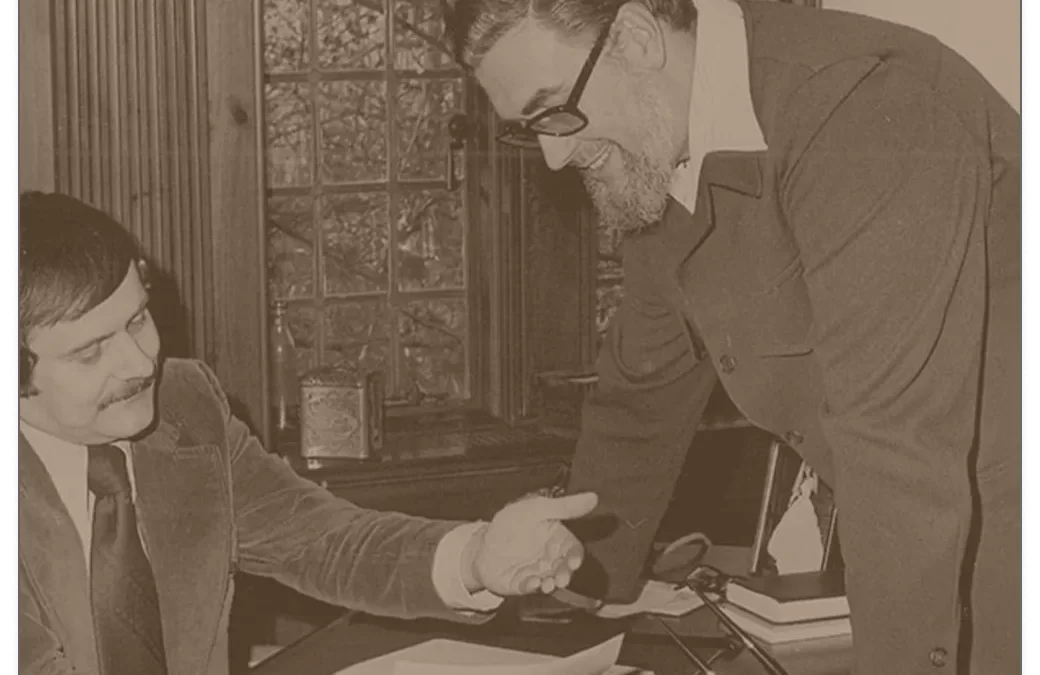
Jay Adams Is Deep and Compassionate

Friday, January 27th, 2012

Jay Adams Is Deep and Compassionate

My two-hour flight home from two days of team meetings at Capital Bible Seminary provided some time for reflection. In particular, I pondered Jay Adams’ nouthetic counseling model. 

Here’s a summary of my “second look” at Adams.

Jay Adams Was/Is a Model Builder and a Movement Builder 

While the Puritans were great builders of soul care and shepherding models, since their day few Christians have developed, from scratch, a biblically-based approach to people, problems, and solutions. Adams has done so…from scratch, not building on other current models, but building on God’s Word.

Whether or not you agree with Jay Adams’ model is not my point. My point is to affirm the facts: who else in Christian circles in the past fifty years has independently built a unique, new, fresh, comprehensive approach to counseling?

Add to that…a model that became a sustained “movement.” The “biblical counseling movement” is now entering its third generation. It has grown, changed, and developed as Powlison’s book and Lambert’s book indicate. But it traces its roots to Jay Adams.

I try to imagine what it must have been like to be starting from scratch in the early 70s. Counseling every day, studying Scripture, applying truth to the lives of hurting and hardened parishioners, teaching others, writing books, and shepherding a growing movement. Again, disagree with “the movement” if you want to, but let’s give Jay Adams credit for the massive work of building a fresh model and a sustained movement while pastoring/shepherding/counseling real folks with real life issues.

Jay Adams Was/Is a Comprehensive Theorizer 

While the Puritans were great soul physicians developing theological manuals about the soul, since their day few Christians have developed a counseling/shepherding/pastoring-focused theological and practical manual. Adams has.

Yes, many today are penning “Christian counseling” and “biblical counseling” books. But few seek to provide a comprehensive theology/theory of people, problems, and solutions. Adams did throughout his writings, and particularly with A Theology of Christian Counseling: More Than Redemption, The Christian Counselor’s Manual, and Competent to Counsel.

In the past fifty years a few others have sought to develop a comprehensive theory of Christian/biblical counseling: Larry Crabb with Understanding People and his other writings, Eric Johnson with Foundations of Soul Care, myself with Soul Physicians and Spiritual Friends. While these authors vary greatly from one another, they have in common writing not only about particular counseling issues and practical counseling methods, but seeking to develop a comprehensive Christian theory. Adams paved the way.

Like or dislike his theory/model, but don’t call him shallow. Disagree with him at specific points if you decide to, but do it engaging his actual (copious) writings, not as a broad brush stroke: “He’s not deep,” or “He’s too ________.” It’s easy to make those charges about anyone…in the abstract…

Here’s one specific example. Some claim that Adams’ “dehabituation and rehabituation” model is shallow and behavioral. Anyone saying that should read Kent Dunnington’s Addiction and Virtue. While I suspect that Adams might disagree with a decent amount of Dunnington’s book, nonetheless, the book demonstrates that “habit” is a deeply theological and philosophical construct with literally 1,000s of years of history behind it.

Dunnington builds a sophisticated case that habit is anything but “behavioralistic.” Habit, rightly understood, as Adams did, is about motivations of the heart—how they are structured, deconstructed, and reconstructed. Again, disagree with Adams “take” on “habituation” if you wish, but at least engage the depth of his insights with specific reasons for disagreement…

Jay Adams Was/Is a Rare Combination: A Theologian/Practitioner 

I’ve already “hinted at” this category. Jay was doing all of this “theological theorizing” while pastoring, shepherding, discipling, and equipping. His in-depth thinking about the Bible’s truth about people, problems, and solutions was never done as some “ivory tower academic.” It was never uncoupled from the real life struggles that parishioners and counselees were bringing to him daily.

Fifty years later, we have some folks who are good writers of theory/theology of biblical/Christian counseling. Some who are good writers of practice/methodology of biblical/Christian counseling. Some who are good counselors-practitioners. Few combine all these talents.

Agree or disagree with Jay, but let’s give him his due. He was/is that rare combination of theologian/practitioner, thinker/doer, visionary/movement builder.

Jays Adams Was/Is Compassionate 

This header, perhaps more than others, may be met by some with dismay and statements like: “But Jay and nouthetic counseling are all about harsh confrontation!” First, that in itself is an inaccurate and unfair caricature.

Second, while Jay’s writing and counseling style may not be as “warm and fuzzy” and “empathetic” as some of us may prefer, that’s different from assessing his level of heart compassion. Think about one of Jay’s basic definitions of nouthetic counseling: to confront out of concern for change.

Real people were coming to Jay. They had been to “secular counselors” and their problems in living were not being addressed effectively and biblically. They had been to their pastors who either provided warmed-over secular therapy or admitted that they had no training in pastoral care.

These hurting, struggling folks were coming to Jay with their besetting sins. He strove to help them biblically to change for good. By “for good,” I’m implying both: a.) for the long term, and b.) for good and godly motivation: for God’s glory and so they could minister more effectively in the lives of others.

People were stuck in their sins and Jay wanted to turn to the Bible to help people change. That strikes me as compassionate.

Pastors sensed that they lacked competence to help their hurting parishioners. Ministers lacked confidence in the Bible’s ability to address the real life issues their sheep were struggling against. Jay sought to help pastors, in particular, to regain their confidence in God’s Word and to develop competence in using God’s Word to help their flock. That strikes me as compassionate.

What’s Up with Bob?

Some may be wondering, “What’s up with you, Bob? When did you become Jay Adams’ ‘apologist’?” I’m not anyone’s apologist. Jay Adams does not need me to “defend” him. I’m simply sharing some reflections from 36 hours ago at 36,000 feet.

Others may be wondering, “Who are you targeting with this blog post? Who are you taking shots at?”

No one.

Well, if anyone, perhaps myself.

Perhaps in taking “a second look,” I am doing some “nouthetic self-confrontation” regarding my past level of appreciation for Jay Adams as a model builder, movement builder, comprehensive theorizer, theologian/practitioner, and compassionate care-giver.

If that same shoe fits for you, then you can choose to wear it also.

My “model” and my “style” still are not identical to Jay’s nouthetic counseling. However, that doesn’t mean that I can’t deeply appreciate and respect who he is in Christ and what he has done for the Body of Christ through Christ’s grace.

Join the Conversation 

What do you think? Is Jay Adams deep and compassionate?

RPM Ministries: Equipping You to Change Lives with Christ’s Changeless Truth

Tags: , , , ,

The Biblical Counseling Movement After Adams

Monday, January 9th, 2012

The Biblical Counseling Movement After Adams by Heath Lambert, Reviewed by Bob Kellemen

Note: This review was first posted at The Gospel Coalition and is re-posted with permission. You can read it there at The Biblical Counseling Movement After Adams

Book Details

Purchase a Copy: The Biblical Counseling Movement After Adams

Author: Heath Lambert

Publisher: Crossway

Publication Date: September 2011

Pages: 224

Category: Biblical Counseling, Church History

ISBN: 978-1-4335-2813-2

Retail Price: $17.99

Reviewer: Bob Kellemen

What Is Biblical Counseling?

During a recent presentation at the Evangelical Theological Society, I was reminded that well-informed Christian leaders continue to hold stereotypes about “biblical counseling.” During the Q/A time after my paper on A Theologically-Informed Approach to Sexual Abuse Counseling, one attendee stated, “That’s a more robust and relational approach to biblical counseling than I’ve heard before. Previously, I would not have referred a victim of sexual abuse to a ‘biblical counselor’ because I assumed they would simplisticly and heartlessly quote Scripture at them, and not empathetically grieve with them.”

Heath Lambert’s, The Biblical Counseling Movement After Adams, addresses whether that was ever an accurate depiction of “first generation biblical counseling”—Jay Adams’s nouthetic counseling. It also explores whether it is an accurate portrayal of “second generation biblical counseling”—the focus of Lambert’s work.

Understanding the Historical Context 

From the outset, Lambert clarifies several important misconceptions. First, he notes that “counseling is ministry, and ministry is counseling. The two are equivalent terms” (p. 21). Second, Lambert explains that “if counseling is equivalent to ministry, it means that it must be informed by the Bible and that those who do it are theologians” (p. 21).

He notes that even conservative, Bible-believing, Christ-exalting ministers of the gospel fail to grasp that counseling is an essential part of ministry. “They demonstrate the misunderstanding every time they say things like, ‘Oh, I don’t counsel people; I’m a preacher.’ Or, ‘Counseling takes too much time way from my other ministries.’ Or, ‘I don’t think the Bible has anything to say about this problem; you need to see a professional’” (p. 22).

It is at this point that Lambert connects his own view of biblical counseling to Adams’s original purpose and calling in launching the nouthetic counseling movement. “I was captivated by Adams’s vision to reclaim counseling as a theological and ministerial task and of his mission to make counseling an enterprise that was centered on Christ, based on his Word, and located in the local church” (p. 23).

This is one of numerous times where Lambert demonstrates his understanding of the historical context behind nouthetic counseling and his respect for the role that Adams played in returning the church to the personal ministry of the Word. Lambert traces the history of pastoral counseling in America and builds the case that “the absence of theology in counseling was the order of the day when, in 1970, Jay Adams published Competent to Counsel” (p. 35). It is impossible to understand or appreciate the pioneering work of Adams apart from grasping that “it was the role of Adams to begin to restore to the church an understanding that it had held before the American Civil War, namely, that counseling was within the realm of the church, every bit as much as its counterpart in public ministry, preaching” (p. 36).

Lambert is careful to express his appreciation for Adams. “This is a book about how biblical counselors have grown up and matured since the initial leadership of Jay Adams, but it is not a strike against Adams…. His work revolutionized the way thousands of people do ministry…. God has used him mightily to recalibrate the church’s thinking about how to help hurting and struggling people. I have no interest in any sort of unkind or ungodly attack on a man to whom the church owes much” (p. 47).

A Family Metaphor

That said, The Biblical Counseling Movement After Adams is not hagiography. “Jay Adams’s work was imperfect…. Adams built a movement from scratch, almost alone, and was doing so against powerful forces opposed to his model. It is my goal to honor Dr. Adams by carefully considering his work and the context in which he built it and by highlighting the efforts of the men laboring in the tradition he began, to improve upon the good work he started” (p. 47).

It is within this context that Lambert selects the family or generational metaphor. He references Adams as “the first generation of biblical counseling” and refers to the leadership of David Powlison and others who followed him in improving Adams’s thoughts as “second generation biblical counselors.”

It is here that Lambert’s solid historiography could have been strengthened. In introducing this second generation, Lambert opines that “…by the late eighties and early nineties new leadership began to rise up, mostly out of one of the organizations founded by Adams, the Christian Counseling and Educational Foundation (CCEF)…. The new blood consisted of men such as Ed Welch and Paul Tripp, but the clear leader was David Powlison” (p. 44).

While many familiar with the biblical counseling movement might agree with Lambert’s summary, he provides only anecdotal support for who should be considered representative of each generation. Lambert’s two-generational model could have been reinforced by an operational definition of first generation and second generation biblical counseling followed by a quantitative examination of the literature over the past forty years to determine who best represents which generation. This might have raised to the surface additional counselors and organizations that could have broadened, deepened, and enriched the contrasts/comparisons between these two proposed generations of biblical counselors.

Families Grow and Develop 

Still, The Biblical Counseling Movement After Adams is a valid and valuable book for anyone who wants to understand what makes biblical counseling truly biblical, and how the modern biblical counseling movement has developed over the past forty years. Throughout the book, Lambert focused on three areas of advancement from the first to the second generation:

Advancements in Counseling Theory/Conceptual Models: How counselors think about counseling; fundamental beliefs; counseling models of people, problems, and solutions.

Advancement in Counseling Methods: How counselors do counseling; foundational roles; the process of change.

Advancement in Counseling Apologetics: How counselors talk to and about other counseling systems; the tone of the conversation; the level of engagement and investigation.

In each section, Lambert culls from Adams’s writings to summarize Adams’s approach to theory, methods, and apologetics. He then compares and contrasts Adams’s views with those of second generation counselors like Powlison, Tripp, Lane, Welch, and a few select others.

Advances in How Biblical Counselors Think about Counseling

Lambert highlights two areas of perceived development in counseling theory: advancement concerning sin and suffering, and advancement concerning human motivation.

Regarding sin and suffering, Lambert provides a helpful summary of his view of the contrast. “The model that Jay Adams developed included a heavy emphasis on confronting sin patterns observed in counseling. While the second generation has not abandoned the need to confront sin, it has sought to advance the movement by seeing the counselee in a more nuanced way as both a sinner and a sufferer” (p. 50).

Lambert places Adams within his historical context—the need to draw the church back to a focus on responsibility. He sees Adams as someone who understood human suffering and the Bible’s teaching on it, but who, because of the historical context, did not develop a robust theory or methodology for counseling the suffering.

In contrast to the stereotype illustrated in the beginning of this review, Lambert provides copious documentation of second generation biblical counseling writings about a parakaletic approach to sufferers. Their biblical “sufferology” includes biblical comfort (2 Corinthians 1:3-11), biblical connection (Romans 12:15), biblical compassion and identification (Hebrews 2:10-18; 4:14-16), and much more.

The section on advancement concerning human motivation is likely to be hotly debated by people “within and outside the movement.” Lambert explores the charge that Adams’s model was behavioralistic (a charge Adams ferociously denies), and he provides documentation proposing that second generation biblical counselors have constructed a more thorough understanding of heart motivations.

Advancements in How Biblical Counselors Do Counseling

Lambert begins this section by noting several areas of overlap between first and second generation biblical counseling methodology. He then contends that Adams’s overall methodology was “overly formalized” (p. 87), and that “Adams’s emphasis on pastoral authority tended to obscure the importance of building loving relationships with counselees” (p. 88).

While appreciating the historical context behind Adams’s strong emphasis on formality and authority, Lambert applauds second generation methodological advancements. These include counseling that: is familial (pp. 90-91), demonstrates affection (pp. 91-92), is sacrificial (pp. 92-93), is person-oriented (pp. 94-96), sees the counselor as a fellow sinner and sufferer (pp. 96-97), and addresses suffering before sin (pp. 97-98).

Advancement in How Biblical Counselors Talk about Counseling

Lambert tells the fascinating story of eight stages in the history of biblical counseling dialogue with “non-biblical counselors.” In the process, he outlines three primary areas where second generation apologists matured:

• Construct: To “construct” is to highlight a positive focus on the development of a robust biblical model of helping people with their problems.

• Confront: To “confront” is to speak the truth in love out of concern by demonstrating how secular models fail to understand people, and fail to offer people the hope that is found only in the living Word (Christ) and the written Word (Scripture).

• Consider: “In a tertiary way, biblical counselors should consider what there is to learn from alternative models” (p. 116).

In this section, the changing tone (more gentle) and attitude (more respectful) of the second generation counselors was touched upon, but could have been examined further.

Increasingly Competent Counseling 

Readers who are unfamiliar with the modern biblical counseling movement would be wise not only to read The Biblical Counseling Movement After Adams, but also The Biblical Counseling Movement: History and Context by David Powlison. In many ways, Lambert’s work is “the sequel.”

While not everyone will agree with all of Lambert’s contrasts and comparisons, especially those most loyal to Jay Adams and his nouthetic counseling model, the book successfully breaks down many still-existing stereotypes about the modern biblical counseling movement. More importantly, it articulates a robust, relational approach to one-another ministry while teaching about the history of the movement.

Join the Conversation 

What is your evaluation of The Biblical Counseling Movement After Adams?

RPM Ministries: Equipping You to Change Lives with Christ’s Changeless Truth

Tags: , , , , ,

Comfort Food for Mutual Ministry by Paul Tautges

Sunday, January 8th, 2012

Comfort Food for Mutual Ministry by Paul Tautges

Note: Pastor Paul Tautges shared this blog post this week at his Counseling One Another blog. You can read the entire post at Comfort Food for Mutual Ministry.  

Here’s an excerpt from his post about his favorite page from Equipping Counselors for Your Church.

Comfort Food for Mutual Ministry by Paul Tautges

Last fall I posted a review of Bob Kellemen’s new book, Equipping Counselors for Your Church. You can read that review here.

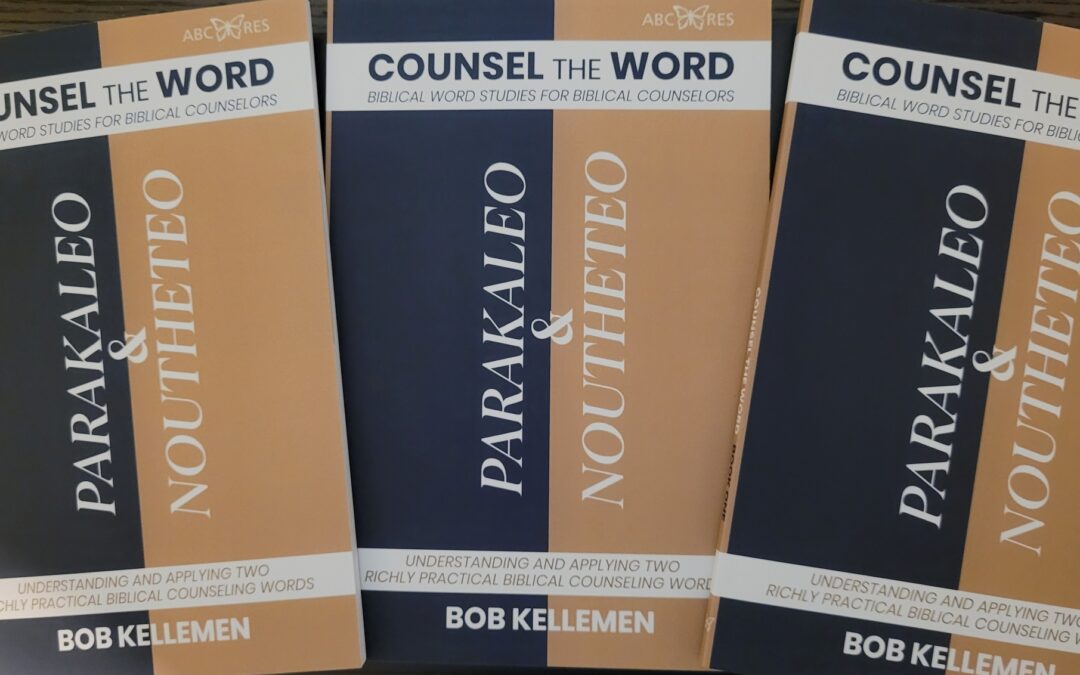
Today, I draw your attention to one of the best pages in the book, which calls us to the mutual ministry of comfort. Bob effectively argues for balance in two areas of biblical counseling: confrontation and comfort. Both, he rightly affirms, are Scriptural priorities we must grow in as we counsel one another. Here’s a lengthy quote that received a smiley face and a “Yes!” in the margin of my copy. In the context of this quote the author has just finished explaining the importance of noutheteo, warning, and now urges for the equally-important ministry of parakaleo, coming alongside in mutual ministry to comfort and strengthen one another.

Paul never intended Romans 15:14 to be the final or only word on the nature of biblical counseling. Nor did he use noutheteo as the only or even the primary concept to describe the personal ministry of the Word. For instance, in 1 Thessalonians 5:14, Paul uses five distinct words for biblical counseling. “And we urge [parakaleo] you, brothers, warn [noutheteo] those who are idle, encourage [paramutheomai] the timid, help [antechomai] the weak, be patient with [makrothumeo] everyone.”

Among the many New Testament words for spiritual care, parakaleo predominates. Whereas noutheteo occurs eleven times in the New Testament, parakaleo (comfort, encourage, console) appears 109 times. In 2 Corinthians 1:3–11, Paul informs us that we are competent to comfort (parakaleo) one another. Those who have humbly received God’s comfort, God equips to offer comfort to others.

Continue reading at Comfort Food for Mutual Ministry.

Join the Conversation

What does comprehensive, compassionate one-another care look like?


RPM Ministries: Equipping You to Change Lives with Christ’s Changeless Truth


Tags: , , , ,

Five to Live By

Saturday, May 7th, 2011

Five to Live By 

Linking you to the top 5 Christian blog posts of the week—posts that provide robust, rich, and relevant insights for living.

Mother’s Day: Be Very Sensitive

Justin Taylor links you to several important posts about Mother’s Day—and our need to be very sensitive. In wanting to honor Moms, our churches often are insensitive to those women for whom Mother’s Day may be a very difficult day. Read with insight and act with compassion: Infertility and Mother’s Day.

A Dirty Word List?

Ed Welch is one of my favorite biblical counseling bloggers. I appreciate his candor, as in this post about our dirty word list in biblical counseling. Read all about it in Biblical Counseling Dirty Words.

Incompetent to Counsel

You know that it’s rare for me to list one of my own posts. Well, technically I’m not doing that. Instead I’m listing a post from the Biblical Counseling Coalition’s new blog site, Grace & Truth. I just happen to be one of the first week’s blogger. Read my post on finding strength in weakness (and all the others): Competent in Christ.

A Prayer by Jay Adams

Jay Adams, the founder of Nouthetic Counseling, posted a moving, candid prayer that is a great reminder to all of us, regardless of our age. Read and learn from Jay’s wisdom in Age.

Daddy Takes the Bee Sting for Us

My good friend, Pastor Steve DeWitt, shares a stirring illustration of the bee sting in The Sting Removed.

Join the Conversation

Which post impacted you the most? Why? What blog posts have you enjoyed this week that you want to share with others?

Tags: , , , ,

The Biblical Counseling Movement: History and Context

Monday, April 19th, 2010

The Biblical Counseling Movement: History and Context

Book Details

• Author: David A. Powlison, Ph.D.

• Publisher: New Growth Press (February 2010)

• Category: Biblical Counseling, Church History

• ISBN: 9781935273134

• Retail Price: $39.99

• Review Source: This review first appeared at TGC Review at The Biblical Counseling Movement.

• Purchase: At Amazon.com

Reviewer: Bob Kellemen, Ph.D., LCPC, is the Founder and CEO of RPM Ministries. Bob has pastored three churches, chaired the MA in Christian Counseling and Discipleship department at Capital Bible Seminary, and is the author of five books: Soul Physicians, Spiritual Friends, Beyond the Suffering, Sacred Friendships, and God’s Healing for Life’s Losses.

Recommended: Dr. David Powlison of the CCEF unites the twin themes of biblical counseling and church history in his excellent work The Biblical Counseling Movement: History and Context. Everyone interested in the modern biblical counseling movement will benefit from this well-researched and well-written book. It presents a fair and balanced exploration of one of the most important developments in the Evangelical church over the past generation. Readers will be equipped not only with historical insight, but more importantly, with wisdom for how to speak the truth in love.

An Insider’s View of the Birth and Growth of Modern Biblical Counseling

The name “Jay Adams” and the method of counseling known as “nouthetic counseling” are familiar to Evangelicals in the biblical/Christian counseling world. As author David Powlison notes, most people either love or hate Adams and nouthetic biblical counseling.

Powlison, while acknowledging his own personal history as one trained within the nouthetic biblical counseling movement, and as a friend of Dr. Adams, still is able to write with a historian’s objectivity. The Biblical Counseling Movement is neither hagiography nor a blistering attack. It is a balanced, nuanced examination, not only of the history, but also of the theology and methodology of Jay Adams and nouthetic biblical counseling.

The core chapters were originally Powlison’s Ph.D. dissertation. The book edition adds a lengthy appendix, containing articles by Powlison. These extend and deepen the history, offering an intriguing analysis of the birth and development of the nouthetic biblical counseling movement and its relationship to Evangelical psychotherapists.

The History and Shaping Factors

Powlison first takes his readers to the historical backdrop that led to the rise of modern nouthetic biblical counseling. As E. Brooks Holifield explained in A History of Pastoral Care in America, so Powlison traces the movement of pastoral ministry from a focus on salvation and progressive growth in Christlikeness to a focus on self and “self-actualization.” In the generation before Jay Adams’ ministry (the 1920s to 1950s), pastoral counseling was strongly influenced by liberal Protestantism and secular psychology.

Powlison tells the riveting story of Adams’ journey as a young pastor facing crisis after crisis among his parishioners and feeling inadequately prepared. Adams’ internship under the secularist O. Hobart Mowrer, of all people, was a culminating experience leading to Adams’ rejection of secular psychology.

In Powlison’s hand, the narrative is never shallow. He describes other influencing factors on Adams’ theory, including his personality, his background as a preacher, his Reformed Presbyterian theology, and his study of Van Til’s pressupositional apologetics, among others. One cannot understand Adam’s nouthetic approach apart from grasping these background elements.

An Afternoon Soap Opera

Once Adams launched the nouthetic biblical counseling movement with his publication of Competent to Counsel, along with the start of the Christian Counseling and Education Center (later to be renamed the Christian Counseling and Education Foundation–CCEF), and later with the start of the National Association of Nouthetic Counselors (NANC), the history begins to sound like an afternoon soap opera. Powlison colorfully depicts the intrigue within and without the movement.

While Adams spent part of his ministry critiquing secular psychology, he reserved more of his bombast for those within the church whom he considered “integrationists” who he believed had sold their birth right for a bowl of pottage by trying to blend and merge biblical truth with psychological theory and practice. Engaging page after engaging page illustrates the important interaction between “nouthetic biblical counseling” and “Christian integrationist psychology”

Of course, many would not accept being placed in either “camp.” In fact, not everyone today who claims the title “biblical counselor” would equally own the label “nouthetic counselor.” This is the one weakness I find in the title and language of the book—the seamless merging of “nouthetic counseling” and “biblical counseling.” (In this review, I have used the phrase “nouthetic biblical counseling” to indicate the specific model espoused by Adams and explored by Powlison).

Perhaps much lesser known to “outsiders” are the historical in-house squabbles between early leaders of the nouthetic biblical counseling movement. In particular, Powlison addresses the differences in personality, theory, and methodology that arose between Adams and his nouthetic biblical counseling peer, John Bettler. If ever there was an antithesis to Adams, it was Bettler. Their eventual drifting apart, despite mutual respect and friendship, almost could have been predicted.

Powlison also tracks the ups and down of the movement in terms of influence (memberships, readership, sister organizations, “competing” organizations, etc.). To see the widespread impact of nouthetic biblical counseling today, it may surprise some to read about the many years when, according to Powlison, it languished.

What Makes Biblical Counseling Truly Biblical?

Powlison’s work is not only historiographical. It also offers readers a thoughtful analysis of the theology and methodology of nouthetic biblical counseling, of Christian psychology, and of Christian counseling. Two lengthy and informative chapters outline the views, accusations, counter-views, and perspectives of most of the leading characters in biblical Christian counseling and psychology from the 1960s to the 1990s.

It would be almost impossible to read Powlison’s summaries without being challenged to reflect seriously about one’s own beliefs about the real meaning, in practice, of the sufficiency of Scripture. Just what does it mean and what does it “look like” to practice truly biblical Christian counseling that is Christ-centered, comprehensive, compassionate, and culturally-informed?

Reading The Biblical Counseling Movement is like discovering a time capsule. You un-bury it, read the enclosed note, and say, “Aha! So, that’s why things are the way they are today!” You come away with a greater appreciation for what Jay Adams was attempting to do. You come away with a greater appreciation for those who attempted to say, “Jay, you may have pulled the pendulum too far and done so a little too caustically.” You come away with a better understanding of the ongoing “camps” in the biblical Christian counseling movement(s) that exist to this day.

For a rollickingly good read (yes, I said that about a book that once was a dissertation!), and for vital insight into the shape of pastoral, biblical, Christian counseling and psychology today, The Biblical Counseling Movement is a unique contribution to the field.

Join the Conversation

1. Do you agree or disagree that pastoral ministry and Christian/biblical counseling has tended to move away from a focus on salvation and growth in Christ and toward a focus on self and “self-actualization”? What evidence do you see either way? If this is true, what are the dangers?

2. How aware have you been of the in-house debates between members of the nouthetic biblical counseling movement? Does this surprise you? Concern you?

3. How aware have you been of the debates between nouthetic biblical counselors and Christians who practice “integration” of biblical wisdom and secular psychology? Where are you on the “continuum?

4. How would you define “biblical counseling,” and “sufficiency of Scripture”?

Share/Bookmark

Tags: , , , , ,

Competent to Counsel?

Wednesday, June 10th, 2009

A Review Of: Competent to Counsel?:
The History of a Conservative Protestant Anti-Psychiatry Movement

Book Details


*Author: David A. Powlison, Ph.D.
*Publisher: Resources for Changing Lives/CCEF (1996/2009)
*Category: Biblical Counseling, Church History

Reviewed: 06/12/09 by Bob Kellemen, Ph.D., LCPC, Author of Soul Physicians, Spiritual Friends, Beyond the Suffering, Sacred Friendships, and God’s Healing for Life’s Losses

Recommended: A unique historical perspective on the birth and development of Jay Adam’s nouthetic counseling movement, written with historical objectivity by one close to the movement.

Review: An Insider’s Objective Examination of Nouthetic Counseling

This book review is technically not a book review, but rather a dissertation review. Don’t run away, this dissertation (Competent to Counsel?: The History of a Conservative Protestant Anti-Psychiatry Movement) is neither boring nor irrelevant to life and ministry.

The name “Jay Adams” and the group “Nouthetic Counseling” are familiar to Evangelicals in the biblical/Christian counseling world. As author David Powlison notes, most people either love or hate Adams and nouthetic counseling.

Powlison, while acknowledging his own personal history as one trained within the nouthetic counseling movement and as a friend of Dr. Adams, still is able to write with a historian’s objectivity. Competent to Counsel? is neither hagiography nor a blistering attack. It is a balanced, nuanced examination, not only of the history, but of the theology and methodology of Jay Adams and nouthetic counseling.

Powlison takes his readers first to the historical backdrop that led to the rise of nouthetic counseling. As E. Brooks Holifield explains in A History of Pastoral Care in America, so Powlison traces the movement of pastoral ministry from a focus on salvation to a focus on self. In the generation before Jay Adams’ ministry (the 1920s to 1950s), pastoral counseling was strongly influenced by liberal Protestantism and secular psychology.

Powlison tells the riveting story of Adams’ journey as a young pastor, facing crisis after crisis among his parishioners and feeling inadequately prepared. Adams’ internship under the secularist O. Hobart Mowrer, of all people, was a culminating experience leading to Adams’ rejection of secular psychology.

In Powlison’s hand, the narrative is never shallow. He describes other influencing factors on Adams’ theory, including his personality, his background as a preacher, his Reformed Presbyterian theology, his study of Van Til’s pressupositional apologetics, among others.

Once Adams launched the nouthetic counseling movement with his publication of Competent to Counsel, with the start of the Christian Counseling and Education Center (later to be renamed the Christian Counseling and Education Foundation—CCEF), and later with the start of the National Association of Nouthetic Counselors (NANC) the history begins to sound like an afternoon soap opera. Powlison colorfully depicts the intrigue within and without the movement.

While Adams spent part of his ministry critiquing secular psychology, he reserved more of his bombast for those within the church whom he considered “integrationists” who he believed had sold their birth right for a bowl of pottage by trying to blend and merge biblical truth with psychological theory and practice. Engaging page after engaging page illustrates the important interaction between “nouthetic biblical counseling” and “Christian integrationist psychology” (though, in my opinion, many would not accept being placed in either “camp”).

Equally interesting, and perhaps much lesser known to “outsiders,” are the historical in-house squabbles between early leaders of the nouthetic counseling movement. In particular, Powlison addresses the differences in personality, theory, and methodology that arose between Adams and his nouthetic counseling peer, John Bettler. If ever there was an antithesis to Adams, it was Bettler, and eventually drifting apart, despite mutual respect and friendship, almost could have been predicted.

Powlison also tracks the ups and down of the movement in terms of influence (memberships, readership, sister organizations, “competing” organizations, etc.). To see the widespread impact of nouthetic counseling today, it may surprise some to read about the many years when, according to Powlison, it languished.

Powlison’s work is not only historiographical. It also offers readers thoughtful analysis of the theology and methodology of nouthetic biblical counseling, of Christian psychology, and of Christian counseling. Two lengthy and informative chapters outline the views, accusations, counter-views, and perspectives of most of the leading characters in biblical Christian counseling and psychology from the 1960s to the 1990s. It would be almost impossible to read Powlison’s summaries without being challenged to reflect seriously about one’s own beliefs about the real meaning, in practice, of the sufficiency of Scripture. Just what does it mean and what does it “look like” to practice truly biblical Christian counseling that is Christ-centered, comprehensive, compassionate, and culturally-informed?

Reading Competent to Counsel? is like discovering a time capsule. You un-bury it, read the enclosed note, and say, “Aha! So, that’s why things are the way they are today!” You come away with a greater appreciation for what Jay Adams was attempting to do. You come away with a greater appreciation for those who attempted to say, “Jay, you may have pulled the pendulum too far and done so a little too caustically.” You come away with a better understanding of the ongoing “camps” in the biblical Christian counseling movement(s) that exist to this day.

For a rollickingly good read (yes, I said that about a dissertation!), and for vital insight into the shape of pastoral, biblical, Christian counseling and psychology today, Competent to Counsel? is a unique contribution to the field.

Tags: , , , ,