Tag Archive


Al Mohler A New Kind of Christianity Anxiety Beyond the Suffering Biblical Counseling Biblical Counseling Coalition Black Church History Black History Month Book Review CCEF Christian Counseling Christmas Church Discipleship Emotional Intelligence Emotions Equipping Equipping Counselors for Your Church God's Healing God's Healing for Life's Losses Gospel Coalition Grief GriefShare Grieving Healing for the Holidays Kellemen Luther Martin Luther Ministry Pastoral Ministry Pastors Quotes Reformation RPM Ministries Sacred Friendships Soul Care Soul Physicians Spiritual Direction Spiritual Formation Spiritual Friends Suffering The Best of the Best The Journey Tim Challies Video

Healing for the Holidays: Part 7—Clinging to God’s Rope of Hope

Healing for the Holidays: Part 7—Clinging to God’s Rope of Hope

Note: This is the seventh in a series of posts on Healing for the Holidays. Read Part 1: A Promise, Part 2: Give Sorrow Words, Part 3: Holiday Healing Q/A, Part 4: A Lament for Your Loss, Part 5: Tidings of Comfort and Joy, and Part 6: All I Want for Christmas Is Hope

The Day of Waiting

One of the hardest parts of healing for the holidays is the waiting. Everyone else is waiting with joyful anticipation—for the family reunion, the big dinner, opening of presents. And we’re just waiting for it all to be over. So we can get back to “normal” whatever that is since our loss. That’s normal and natural—we want to survive the holidays.

What’s supernatural? What type of spiritual waiting could lead eventually to thriving even during the holidays? To healing?

Tony Compolo preaches a message where he repeatedly says, “It’s Friday, but Sunday’s comin’.” He’s focusing his audience on Friday-truth: the crucifixion of Christ, and on Sunday-truth: the coming resurrection of Christ. I would change the metaphor a tad because we aren’t living on Friday, we’re living on Saturday. Symbolically, life lived on fallen planet Earth is Saturday living—the day between the crucifixion and the resurrection. The day of waiting. The day that tests our trust.

You’ll never see waiting as one of the grief stages in any research study because it is not natural in a fallen world. It is supernatural. Hope waits. Hope is the refusal to demand heaven now. Waiting is trusting God’s future provision without working to provide for myself. Waiting is refusing to take over while refusing to give up. Waiting refuses self-rescue.

In the context of grief, waiting says, “I want to feel better. I wish things were the way they once were. But I trust God’s good heart. I know one day He will wipe away all tears. I know today He has good plans for my life ahead.”

Remembering the Future 

Waiting is rooted in the Old Testament. The Prophets promised Israel that a better day was coming, later. The New Testament writers develop the waiting theme when they urge us toward patience, perseverance, longsuffering, and remaining under suffering without giving in to despair (Romans 5; James 1; 1 Peter 1-2; and Hebrews 11). The Bible teaches us that in waiting we cling to God’s rope of hope, even when we can’t see it.

Moses teaches that we cling to God’s rope of hope by remembering the future.

“By faith Moses, when he had grown up, refused to be known as the son of Pharaoh’s daughter. He chose to be mistreated along with the people of God rather than to enjoy the pleasures of sin for a short time. He regarded disgrace for the sake of Christ as of greater value than the treasures of Egypt, because he was looking ahead to his reward” (Hebrews 11:24-26).

No quick fix for Moses. No “Turkish Delight” from the White Witch of Narnia. No pleasures of sin for a season. Why? How could he wait? He chose eternal pleasure over temporal happiness. He remembered the future.

Faith looks back to the past recalling God’s mighty works saying, “He did it that time; He can do it now.” Hope looks ahead remembering God’s coming reward saying, “I consider that our present sufferings are not worth comparing with the glory that will be revealed in us. The creation waits in eager expectation for the sons of God to be revealed” (Romans 8:18-19).

Your Waiting Journey and Journal 

1. Faith—Remember the Past: Think back to a time when God brought hope, joy, newness, and resurrection into your life after a loss.

• What did God use to bring about your spiritual victory?

• How did you wait on God by clinging to His rope of hope even when you couldn’t see it?

• How did you begin to see God differently? How did you begin to experience more of His goodness? How were you able to love Him more deeply?

• As you found His strength in your weakness, what was God able to do through you?

2. Love—Face the Present: God’s timing and ours are often light years apart.

• What are you experiencing as you wait on God?

• What would it look like for you to rest in God right now?

• Explore passages like Romans 5; James 1; 1 Peter 1, and Hebrews 11 that teach how to wait on God in the midst of suffering. Paraphrase their message for your life today.

• Find a trusted, safe friend and take the step of sharing with him or her about your hopes and dreams.

3. Hope—Remember the Future: Hope waits.

• What are you waiting on God for? How are you trusting God’s future provision?

• Paul considered that his present sufferings were not worth comparing with the glory that will be revealed in us (Romans 8:18-19). What future glory are you focusing on?

• Read Revelation 7. How do these pictures of your future hope give you hope today?

The Rest of the Story 

Healing hope does not mean we pretend everything is fine. Instead, in our next post we’ll learn that thriving at the holidays means being pregnant with hope. Think about that—the pain of the pregnancy is there, but so is the joyful anticipation of the birth of new life.

Pausing to Reflect 

What does it look like for you to cling to God’s rope of hope even when you can’t see it?

Help for Your Healing Journey 

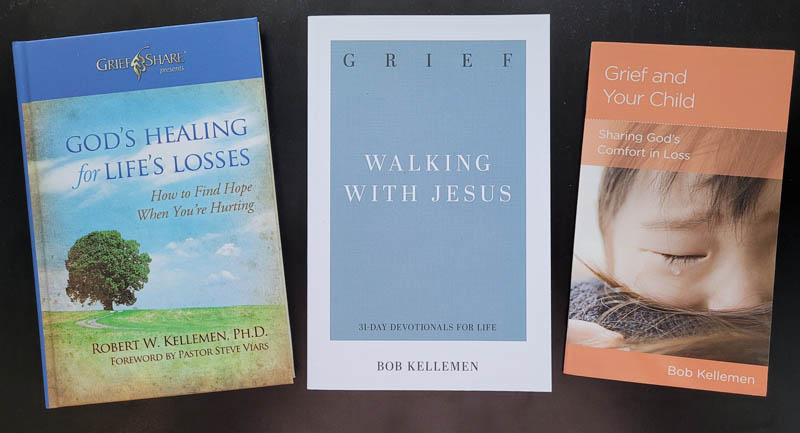
For additional help on your healing journey, learn more about God’s Healing for Life’s Losses: How to Find Hope When You’re Hurting.

Healing for the Holidays: Part 4—A Lament for Your Loss

Healing for the Holidays: Part 4—A Lament for Your Loss

Note: This is the fourth in a series of posts on Healing for the Holidays. Read Part 1: A Promise, Part 2: Give Sorrow Words, and Part 3: Holiday Healing Q/A

Does My Holiday Loss Count?

I’ve received a batch of emails in response to this series. One theme is: “Does my holiday grief count?” One person asked, “I haven’t lost a loved one, but because of a divorce, half the holidays I don’t even see my children. Is it still okay to grieve over that?” Another friend asked, “My adult kids live in Europe and I rarely see them for the holidays. Is that a reason to grieve?”

In writing God’s Healing for Life’s Losses, I communicated that every loss, every separation is a mini-casket experience. Each loss is a reminder of the ultimate loss of death. That is not to say that every loss is of the same magnitude. It is simply to recognize the reality that all loss hurts because every loss is a separation, a tearing away of what was meant to be together.

Yes, your loss counts. Most importantly, your loss counts to God. That’s why He invites you, like He did the saints of old, to lament your loss. Today, let’s ponder six practical principles of lamenting holiday loss—whatever shape or size your loss takes.

Holiday Lament Principle # 1: Getting Started Is the Hardest Part

Many people find that the hardest part of the grief journey is simply getting started. Stepping on the path by facing your pain and hurt can be terrifying. All sorts of questions flood your mind.

“What will I feel? Will I be able to handle whatever I feel? What if my thoughts consume me and my feelings overwhelm me? Will anyone understand? Will anyone join me? Is it worth it? What’s the point?”

But remember, it is worth it. As we learned in Part 1, denial changes nothing. Denial only prolongs the inevitable. Pretending doesn’t change the facts, can’t alter reality.

So don’t beat yourself up because you’re finding it hard to be honest with yourself and God. But do challenge yourself to begin the journey.

Holiday Lament Principle # 2: Other People May Not Understand 

One of the ironies of holiday loss is that your family and friends may think that you’re the one who can’t move on because you’re still grieving. Often, the opposite is true. They can’t move on because they’ve never even started grieving. They’re the ones who can’t even look at pictures of the lost loved one. They’re the ones who don’t dare to talk about the relative who is away during the holidays serving our country in Afghanistan. Don’t let their fear deter you. Don’t let their denial cause false guilt in you about your grief.

Holiday Lament Principle # 3: Be Honest with God—He Knows Everything Anyway! 

What is lament? If candor is being honest with yourself about the pain you feel over loss, then lament is being honest with God about your loss and pain. Lament is facing your grief face-to-face with God.

We somehow think we’re hiding things from God when we refuse to verbalize them. But since God is all-knowing, and since He knows the thoughts and intents of our heart, He already knows all that we think and feel.

The Psalmists understood this, which is one reason why there are more psalms of lament than psalms of praise and thanksgiving. Let that sentence sink in. So tell God the truth…whatever it is you are thinking and feeling.

Holiday Lament Principle # 4: Be Courageous—God Invites Lament 

But let’s be honest, this is where grief gets very confusing for the committed Christian. We love God; we know He loves us. We know God is good; we know life has now turned bad. So we want to know, sometimes we want to scream it, “How could a good God allow such loss!?”

But dare we ask? Do we dare verbalize our lament to God?

The Scriptures are clear—God invites lament. The Bible repeatedly illustrates believers responding to God’s invitation with honest words that would make many a modern Christian shudder. If you doubt that, read Psalm 13, Psalm 73, Psalm 88, Job 3, and Lamentation 5.

Holiday Lament Principle # 5: Tell God the Truth—He Cares Infinitely 

Lament demonstrates your faith in God. According to Psalm 62:8, if we truly trust God, then we’ll share everything with God. “Trust in him at all times, O people; pour out your hearts to him, for God is our refuge.”

Think about that. The person who can’t be upfront with God about pain, loss, and grief, is the person who doesn’t trust God.

Pour out your heart to God. Why? Because God is your refuge.

When you lament, you live in the real world honestly, refusing to ignore what is occurring. Lament is your expression of your radical trust in God’s reliability in the middle of real life.

Holiday Lament Principle # 6: Honesty with God Draws You Nearer to God 

Psalm 73 is a prime example of lament. Asaph begins, “Surely God is good to Israel” (73:1). He then continues with a litany of apparent evidence to the contrary, such as the prosperity of the wicked and the suffering of the godly (73:2-15). When he tries to make sense of all this, it’s oppressive to him (73:16). He then verbalizes to God the fact that his heart is grieved and his spirit embittered (73:21).

His lament drew him nearer to God. It did not push him away from God. “Yet I am always with you; you hold me by my right hand” (73:23). He concludes, “But as for me, it is good to be near God. I have made the Sovereign LORD my refuge.” (73:28).

It was Asaph’s intense, candid relationship with God that enlightened him to the goodness of God even during the badness of life. “Till I entered the sanctuary of God; then I understood their final destiny. . . . As a dream when one awakes, so when you arise, O LORD, you will despise them as a fantasy” (73:17, 20). Spiritual friendship with God results in 20/20 spiritual vision from God.

To deny or diminish suffering is to reject dependence upon God. God wants us to make use of our suffering, to remember our suffering, to admit our need for Him in our suffering, and to rehearse our suffering before Him.

The Rest of the Story 

But what does God do when I am honest with him about my holiday hurt? What are realistic expectations about what happens in me and what God promises to me? Great questions—ones we’ll explore in our next post on healing for the holidays.

Pausing to Reflect 

Psalm 88 is a classic psalm of lament. In fact, some have called it the Psalm of the Dark Night of the Soul. What would your Psalm 88 sound like?

Help for Your Healing Journey

For additional help on your healing journey, learn more about God’s Healing for Life’s Losses: How to Find Hope When You’re Hurting.

God’s Healing for Life’s Losses Seminar

God’s Healing for Life’s Losses Seminar

When you, your family members, or friends are grieving over one of life’s many losses, where can you turn for help?

Saturday, November 5, 2011, Dr. Bob Kellemen will be presenting a God’s Healing for Life’s Losses seminar at New Hope Community Church, 5100 Bethesda Ct, Williamsburg, MI 49690 (219-938-8056).

Learn How To:

• Apply to your life a biblical approach to facing life’s losses with courageous honesty.

• Apply to your life a biblical approach to finding healing hope by finding God.

• Apply proven biblical principles to help hurting people to move through the biblical process of hurting and grieving: candor, complaint, cry, and comfort.

• Apply proven biblical principles to help hurting people to move through the biblical process of hope and growth: waiting, wailing, weaving, and worshipping.

• Build healing communities where Christians find courage and comfort in God and each other.

Attend the God’s Healing for Life’s Losses Seminar To:

• Experience personal healing and biblical hope.

• Encounter God in the midst of your suffering.

• Empathize with hurting people more compassionately.

• Encourage suffering people more competently.

• Empower your congregation to become a “hospital for the hurting.”

Sponsored By:

• WLJN Christian Radio, The Northwest Michigan Jesus Ministries, and New Hope Community Church

• Tickets are available at WLJN, 1101 Cass St, Traverse City MI 49685, 231-946-1400.

• Or call New Hope Community Church at: 219-938-8056.

Seminar Registration:

• Cost: $15.00 per person.

• Cost Includes: The seminar, God’s Healing for Life’s Losses book, seminar workbook, continental breakfast, and light lunch.

• Payment Methods: Check or cash.

• Day of the Seminar: The cost will be $20.00 per person.

Seminar Schedule:

• 8:30-9:00: Registration and Continental Breakfast

• 9:00-10:00: Session One: Launching the Journey of Grief: Honesty with Yourself and with God—Candor and Complaint

• 10:00-10:15: Break

• 10:15-11:15: Session Two: Inviting God to Join Your Journey: Finding God Even When You Can’t Find Answers—Cry and Comfort

• 11:15-11:30: Break

• 11:30-12:30: Session Three: Deepening Your Journey During the Dark Night of the Soul: On the Road to Hope—Waiting and Wailing

• 12:30-1:30: Lunch Provided

• 1:30-2:30: Session Four: Traveling with God on the Journey of Faith: Joining the Larger Story—Weaving and Worshipping

Blessed Are Those Who Mourn

Blessed Are Those Who Mourn 

In a recent Ask the Counselor post, I addressed the question, “Should I try to forget my past?” I said a hearty, biblical “No!”

I also said that one biblical response to our past is “reflection”: honestly facing our past face-to-face with Christ. In God’s Healing for Life’s Losses, I call that “candor.” Here’s an excerpt from chapter two: “Candor: Blessed Are Those Who Mourn.” 

Candor: Telling Your Self the Truth

The world has its way of grieving. But, when our fallen world falls on us, when suffering crushes us, we need much more than research. We need revelation—we need God’s inspired truth about how to grieve as those who have hope.

God’s Word offers us profound practical wisdom for moving from denial to candor. What exactly is biblical candor? Candor is courageous truth telling to myself about life in which I come face-to-face with the reality of my external and internal suffering. In candor, I admit what is happening to me and I feel what is going on inside me.

My Personal Candor Journey

I had to move from denial to candor after the death of my father on my 21st birthday. In fact, it was not until my 22nd birthday that the process truly began. I had been handling my loss like a good Bible college graduate and seminary student—I was pretending!

On my 22nd birthday, one year to the day after my father’s death, I went for a long walk around the outskirts of the seminary campus. That day I started facing my loss of my Dad. The reality that I would never know him in an adult-to-adult relationship. The fact that my future children would never know their grandfather.

As I faced some of these external loses, the tears came. Then I began to face some of the internal crosses—what was happening in me. I felt like a loner. Fatherless. Orphaned. Unprotected. On my own. The tears flowed. The process of candor began. The floodgate of emotions erupted. I was being honest with myself.

Biblical Candor Samplers: Fearlessly Facing the Facts

But was it biblical? Does God really allow and even invite His children to be brutally honest about life? Can we support candor biblically?

David practices candor in Psalm 42:3-5.

My tears have been my food day and night, while men say to me all day long, “Where is your God?” These things I remember as I pour out my soul: how I used to go with the multitude, leading the procession to the house of God, with shouts of joy and thanksgiving among the festive throng. Why are you downcast, O my soul? Why so disturbed within me?

Notice that David is honest about his external suffering. He describes his losses—the loss of fellowship, leadership, and worship. He also is candid about his internal suffering. He depicts his crosses—accurately labeling his soul as downcast and disturbed within him.

Job consistently models candor throughout his response to his losses.

What I feared has come upon me; what I dreaded has happened to me. I have no peace, no quietness; I have no rest, but only turmoil (Job 3:25-26).

Again we witness brutal frankness both about external losses and internal crosses.

We could profitably examine the accounts of other biblical characters who practiced candor—Jeremiah, Solomon, Asaph (Psalm 73), Heman (Psalm 88), Jesus, Paul, and so many more. They all convey the same inspired message: it’s normal to hurt and necessary to grieve.

The Apostle Paul does not tell us not to grieve; he tells us not to grieve without hope (1 Thessalonians 4:13). He chooses a Greek word meaning to feel sorrow, distress, and grief, and to experience pain, heaviness, and inner affliction.

Paul is teaching that grief is the grace of recovery because mourning slows us down to face life. No grieving; no healing. Know grieving; know healing.

The only person who can truly dare to grieve, bear to grieve, is the person with a future hope that things will eventually be better. When we trust God’s good heart, then we trust Him no matter what. We need not pretend. We can face and embrace the mysteries of life.

On the Road to Hope

Candor or denial. The choice is a turning point. It is a line drawn in the sand of life, a hurdle to confront.

Faith crosses the line. Trust leaps the hurdle. We face reality and embrace truth, sad as it is. If facing suffering is wrestling face-to-face with God, then candor is our decision to step on the mat. Will you?

Join the Conversation

True faith faces all of life face-to-face with Christ. Where would you put yourself on a scale of 1-10, with 1 being total denial and 10 being facing all of life—internal and external suffering?

Ask the Counselor: “Should I Try to Forget My Past?”

Ask the Counselor: “Should I Try to Forget My Past?”

As a biblical counselor, people often ask me the important question, “Should I try to forget my past?”

I first respond with a one-word answer. “No.”

Then I respond with a blog-size answer using the words:

• Remember

• Reflect

• Repent/Receive/Renew

• Reinterpret

• Retell

• Resources

Remember

Even if we wanted to, we couldn’t forget the past. It’s impossible. More importantly, it’s ungodly.

Memory is our God-given capacity to store and recall what we have experienced and learned. Remembering is part of our design by creation—before the fall into sin. “Remember” is used 167 times in the Bible (NIV), thus reminding us of the importance of remembering.

Some people mistakenly interpret Philippians 3:13 to mean that we should try to forget our past. “Forgetting what is behind and straining toward what is ahead.” The Greek word for “forget” does not mean not to remember, but not to focus my attention on. More importantly, the biblical context is whether Paul would focus his attention on his works of the flesh, attempts at self-righteousness, and putting confidence in the flesh, versus focusing on Christ’s righteousness and the power of Christ’s resurrection.

Paul’s second letter to the Corinthians is a testimony to the biblical value of remembering. “We do not want you to be uninformed, brothers, about the hardships we suffered in the province of Asia” (2 Cor. 1:8a). Throughout the epistle, Paul recalls and rehearses a litany of past suffering.

Reflect

In a similar way, the Psalms are a biblical testimonial to the power and value of remembering face-to-face with God. I call it reflecting.

People typically ask about forgetting in the context of dealing with past suffering—being sinned against, or dealing with past sin—sinning against others. I believe that attempting to refuse to remember our past can actually be a symptom of sin.

Trying to suppress past memories of pain (either regarding our suffering or sin) can be a refusal to face and deal with life. It can be an attempt to deal with pain apart from God. We could compare such attempts to self-sufficient “coping mechanisms” such as drinking and drugs—where we try anything to numb our pain, emptiness, or guilt.

In my book, God’s Healing for Life’s Losses, I describe how the Psalmists, Job, Jeremiah, Jesus, and Paul remember face-to-face with Christ through “candor and complaint/lament.” In biblical candor, we’re honest with ourselves regarding our past and present. In biblical complaint/lament, we’re honest with God regarding our past and present.

Rather than attempting to forget, we are to bring to mind past external events and our current internal thoughts and feelings and bring them to Christ. As I put it in the book, “No grieving, no healing. Know grieving, know healing.” Reflecting on our past is our admission to ourselves and God that we can’t handle our past on our own, that we desperately need Christ.

Repent, Receive Grace, Renew

When our memories of the past relate to our past sin, Christ’s soul-u-tion is to remember, repent, and receive grace. “Remember the height from which you have fallen! Repent and do the things you did at first” (Rev. 2:5).

In Psalms 32 and 51, David models remembering, repenting, receiving grace, and renewing his life by God’s Spirit. Rather than trying the impossible and sinful mental activity of suppressing the memory of his sin, David recalls to mind his sin against God. He repents deeply not only of behavioral sin, but of heart motivational sin.

Having repented, David receives grace—he accepts God’s gracious forgiveness and prays for shalom—a conscience at peace with the God of peace. He then prays that the Spirit would renew a right spirit within him so that he could turn from his path of sin (put off) and return to the path of righteousness (put on).

Reinterpret

But what do we do with our emotional agony when we remember past suffering—being sinned against? God’s Word is clear. We never forget, we re-member.

Think about that word: re-member. To put our memories back together again, to shape our memories through God’s eternal grid.

In God’s Healing for Life’s Losses, I use the life of Joseph to portray how God wants us to remember and then reinterpret our past with spiritual eyes. There I call it “weaving.”

In Genesis 50:20 and 45:4-8, Joseph refuses to forget. He calls to mind his suffering past with these words. “You intended to harm me, but God intended it for good to accomplish what is now being done, the saving of many lives.”

In the Hebrew, the word “intended” can be used in a physical sense for weaving together a tapestry, such as Joseph’s coat of many colors. It can be used in the metaphysical sense in a negative way for weaving together an evil scheme or plot, such as Joseph’s brothers did. Or, it can be used in a positive sense of God weaving together good out of evil.

How do we deal with our past suffering? We look at life with spiritual eyes by bringing to bear God’s eternal narrative, spiritual 20/20 vision, and larger story perspective. Weaving is re-membering—to create wholeness using God’s perspective to bring meaning to our suffering.

That’s how, like Joseph, we find hope when we’re hurting. That’s how, like Joseph, we grant forgiveness to those who have caused our suffering. In so doing we can say, “I grieve, but I don’t despair.”

Retell

Being human involves shaping our personal experiences into stories or narratives. That’s part of our God-given capacity of memory. We shape our sense of self and who we are in Christ from our retelling of our experiences.

As spiritual friends, it is when we listen carefully and compassionately to one another’s most important stories that we gain access to how our friends are attempting to make sense of themselves in the context of their past experiences. Our one-to-one relationships and our small group meetings should be places where we retell our stories.

In God’s Healing for Life’s Losses, I discuss how the retelling process moves us from “weaving” to “worshipping.” In worshipping we are committed to finding God even when we can’t find answers. We are committed to knowing God more than knowing relief from our past. We worship God by retelling our stories like Joseph did—in a way that honors and glorifies God and His role in redeeming our past (see Genesis 45:4-8).

There is no power in forgetting our past. God doesn’t want us to pretend. Of all people, as Christians we must be the most honest about our past. We must remember, reflect, repent/receive/renew, reinterpret, and retell.

Resources

Two biblical counseling resources that I think you will find helpful in dealing with your past are:

God’s Healing for Life’s Losses: How to Find Hope When You’re Hurting by Bob Kellemen.

Putting Your Past in Its Place: Moving Forward in Freedom and Forgiveness by Steve Viars.

Join the Conversation

What is your biblical answer to the question, “Should I try to forget my past?”

Five to Live By

Five to Live By 

Linking you to the top 5 Christian blog posts of the week—posts that provide robust, rich, and relevant insights for living.

What Difference Does Salvation Make Today?

Paul Tripp writes about the gospel gap—we think about salvation past and future, but what about today? Read his post The Nowism of the Gospel.

What Difference Does Christ Make in Suffering?

Julie Ganschow focuses our eyes on Jesus in the midst of life’s difficulties in Redirection toward the Cross.

What Difference Does Christ Make in Grieving?

Robyn Huck of CCEF has been journaling about her grief journey. In her final post, she shares The Value of Grief.

What Difference Does Truth Make?

Tim Challies reviews Trevin Wax’s Counterfeit Gospels.

What Difference Does Marketing Make?

These two posts will be of most interest to authors. Michael Hyatt shares Four Reasons Why Authors Must Market. In a second post, he shares What Social Media Stats to Include in Book Proposals.

Join the Conversation

Which post impacted you the most? Why? What blog posts have you enjoyed this week that you want to share with others?