Tag Archive


Al Mohler A New Kind of Christianity Anxiety Beyond the Suffering Biblical Counseling Biblical Counseling Coalition Black Church History Black History Month Book Review CCEF Christian Counseling Christmas Church Discipleship Emotional Intelligence Emotions Equipping Equipping Counselors for Your Church God's Healing God's Healing for Life's Losses Gospel Coalition Grief GriefShare Grieving Healing for the Holidays Kellemen Luther Martin Luther Ministry Pastoral Ministry Pastors Quotes Reformation RPM Ministries Sacred Friendships Soul Care Soul Physicians Spiritual Direction Spiritual Formation Spiritual Friends Suffering The Best of the Best The Journey Tim Challies Video

Grace Connecting: Exposure without Rejection

Grace Connecting: Exposure without Rejection

The Big Idea: You’re reading Part Two of a series designed to equip you with five biblical counseling skills using the acrostic GRACE. Read Part One: How to Care Like Christ. Excerpted from Spiritual Friends.

What Grace Connecting Requires: Romans 5:6-8

Grace connection requires exposure without rejection, truth with relationship, curiosity rather than analysis, and face-to-face relating instead of back-to-back professionalism. Christ models exposure without rejection in Romans 5:6-8. “While we were yet sinners” (exposure). “Christ died for us” (acceptance). Grace connection communicates, “I see you warts and all, and I still love you, accept you, like you, and move toward you.”

Paul models truth with relationship in Ephesians 4:15. He tells us that the essence of pastoral care involves speaking and living out the truth in love. Consider possible ways to do ministry:

• Truth Minus Relationship: Intimidation/Compliance

• Relationship Minus Truth: Indecision/Confusion

• Truth Plus Relationship: Internalization/Conformity to Christ

Jesus models curiosity versus analysis. At the end of John 2, John notes that Jesus knew all people universally and deeply. Yet, he did not allow his full knowledge to blind him to the uniqueness of individuals. Following John 2, Jesus engages two of the most diverse individuals imaginable: the Jewish male moral religious leader and the Samaritan female immoral irreligious follower. Reread both accounts and you’ll see his respect for each. His probing curiosity. His unique interactions and involvement.

Analysis views your spiritual friend as “a specimen” to be dissected, analyzed, and studied. Curiosity sees your spiritual friend as an image bearer to be experienced, a mystery to enter, and a soul to know.

We would all do well to tape the following prayer somewhere in our “counseling” office. Or better, somewhere in our soul.

The Spiritual Friend’s Prayer: “Dear Lord, Help me to approach every relationship as an audience with an eternally valuable human being.”

In John 3-4, Jesus models face-to-face relating instead of back-to-back professionalism. He enters their individual worlds. He goes where they are, both geographically and soulfully. He becomes a cartographer of their soul, exploring their personal terrain.

With the woman at the well, in particular, he exposes his humanness. He’s authentic, open, vulnerable, and honest. He connects, touches, and moves toward. He’s anything but surface, fake, phony, uncaring, and distancing.

Building a Connected Spiritual Friendship: Galatians 6:1

How do you develop connected relationships? Exploring how not to develop grace relationships begins to answer that question.

How Not to Build Grace Connections: Job 16:2

Job accused his “friends” of being “miserable comforters.” The word “miserable” means troublesome, vexing, and sorrow-causing. They were the opposite of “comforters”—they were not consoling, sympathetic; they did not feel deeply Job’s hurt. They never said or conveyed in any way, “It’s normal to hurt.”

Instead of grace connecting, they practiced condemning distancing. Read the verses below and notice examples of their poor relational abilities flowing out of their poor theology (Job 42:7) and their cold hearts:

1. Superiority: Job 5:8; 8:2; 11:2-12; 12:1-3; 15:7-17

“We’re better than you. You’re inferior to us.”

2. Judgmentalism: Job 4:4-9; 15:2-6

“It’s not normal to hurt! Your suffering is due to your sinning!”

3. Advice without Insight/Discernment: Job 5:8; 8:5-6; 11:13-20; 42:7

“Here’s what I would do if I were you.” “Do this and life’s complexities will melt away.” “I have the secret that will fix your situation.” They offered quick, trite advice. They were rescuers, answer men, and cliché makers. 

The Rest of the Story

I know, you want to scream, “Don’t stop now! Not with what not to do!” Sorry. But come on back for Part Three: How to Build Grace Connections.

Join the Conversation

How would your relationships change if you prayed The Spiritual Friend’s Prayer? “Dear Lord, Help me to approach every relationship as an audience with an eternally valuable human being.”


Share/Bookmark


How to Care Like Christ: Offer GRACE

How to Care Like Christ: Offer GRACE

The Big Idea: You’re reading Part One of a new blog mini-series designed to equip you with five biblical counseling skills using the acrostic GRACE. Excerpted from Spiritual Friends.

What to Do After the Hug

When your friend comes to you in the throes of suffering, how can you help? What do you do after the hug? Or, put another way, “How can my spiritual friends and I engage in grace relationships that sustain their faith?”

This question begs another. “What is a grace relationship?” Grace relationships involve five one another relational competencies that I summarize using the acrostic GRACE:

G Grace Connecting: Proverbs 27:6

R Rich Soul Empathizing: Romans 12:15

A Accurate/Active Spiritual Listening: John 2:23-4:43

C Caring Spiritual Conversations: Ephesians 4:29

E Empathetic Scriptural Explorations: Isaiah 61:1-3

Picture grace that helps others in their time of need. Picture Jesus. Picture caring like Christ.

“Therefore, since we have a great high priest who has gone through the heavens, Jesus the Son of God, let us hold firmly to the faith we profess. For we do not have a high priest who is unable to sympathize with our weakness, but we have one who has been tempted in every way, just as we are—yet was without sin. Let us then approach the throne of grace with confidence, so that we may receive mercy and find grace to help us in our time of need” (Hebrews 4:14-16).

What a perfect picture of grace relating. Jesus is not aloof, distant, or removed. In His incarnation, He went through the heavens to earth sharing in our humanity, becoming like us, so that He might help us (Hebrews 2:14-18). Jesus is not unsympathetic. He is touched with the feelings of our infirmities. He’s able to suffer with and be affected similarly to us. He has the same pathos, shares the same experience, has fellow feelings, endures a mutual participation, and partakes of a full acquaintance with us. He offers grace to help in our time of need—well-timed help, help in the nick of time, words aptly spoken in season and actions seasoned with grace.

We can become Jesus with skin on by expressing GRACE relational competencies. The first of which we aptly call “Grace Connecting”: personal involvement with a deep commitment to the maturity of another person.

Grace Connecting: Committed Involvement—Proverbs 27:6

Grace connecting involves communion through communication. You have love in your heart for your spiritual friends. Do they know that? Can they feel it? Do they experience you? Grace connecting allows your passionate love to powerfully touch your spiritual friend.

Connecting is the foundational competency in the art of relationships. Spouses need it. So do parents, co-workers, teammates, friends, church members, and neighbors. We all need to become competent connectors. If we were, all professional helpers (social workers, counselors, and psychologists) would be superfluous, extra, excess, fluff.

The Need for Grace Connecting

There’s plenty of potential pain in spiritual friendship. Ponder what it’s like for you when another person becomes aware of the grief in your soul or the sin in your heart. Risk. Vulnerability. Exposure. Consider:

• How unpleasant it is when you experience and acknowledge devastating emotions (Psalm 42, Psalm 88) (emotional).

• How shameful it feels to admit your sinful motivations and actions, and to feel too weak to do anything about them (Romans 7, James 4-5, Hebrews 3) (volitional).

• How embarrassing it is to confess your mental confusion and sub-biblical images and beliefs about God, others, yourself, and life (Romans 8, 12, Ephesians 4) (rational).

• How vulnerable you feel when you open up about emptiness and thirsts in your soul (Romans 8:18-27) (relational).

• What it’s like to feel like your hurt is abnormal (sustaining).

• What it’s like to believe that it’s impossible to hope (healing).

• What it’s like to experience the horrors of your sin without understanding the wonders of God’s grace (reconciling).

• What it’s like to sense that you’ll never mature (guiding).

When people share about these issues, they need a trustworthy friend. They need grace relationships offered through grace connecting.

Defining Grace Connecting: Proverbs 27:6; 20:30

What is grace connecting? I often learn best by opposites, by poor examples. Let’s start with what grace connecting is not.

Grace Connecting Is Not

The following would not make the pain, risk, and vulnerability of spiritual friendship bearable.

• A Warm Feeling: “Boy, I feel neat when I’m with you.” Spiritual friendship is not always a pleasant experience.

• Sweetness: Merely reflecting and mirroring whatever your spiritual friend says. Non-directive acceptance of everything, including sin.

• A Stage in Counseling: “We’ll do connecting today and then drop it.”

• A Technique in Counseling: “Crying 101.” “Three steps to really caring.”

What Grace Connecting Is: Incarnation

Let’s develop from Scripture our definition of grace connecting: personal involvement with a deep commitment to the maturity of another person. “Faithful are the wounds of a friend,” Solomon teaches in Proverbs 27:6 (KJV).

“Wounds” are a splitting apart as a doctor does for surgery, an exposure. You enter the ER and say, “Doctor, my chest and the right side of my body are killing me!” You don’t want him to simply be sweet. “That must be really hard for you.” You want him to be skillful, competent—able to diagnose and treat your ailment. So, too, with spiritual friendship. You want to be able to compassionately diagnose heart issues, pulling open the soul and peering deeply inside.

“Faithful” means to support, to bear, to be trustworthy. Alonzo, facing the diagnosis of inoperable cancer, wants to be able to say about you, “I trust you with my soul.” “Faithful” also means to be strong, stable. Alonzo wants to know that his words will not overwhelm you. Touch you deeply, yes. Overwhelm you, no. As his wounds are opened, he wants to know that they will not make you faint, that you will not think less of him.

“Friend” literally means “one who loves you, lover.” The Scriptures use the same word in 2 Chronicles 20:7, calling Abraham God’s “forever friend.” Think of God’s grace relationship with Abraham—encounter, intimacy, fellowship, accountability, fidelity, stability—and you will picture grace connecting.

Proverbs 20:30 speaks of deep commitment to maturity. “Blows and wounds cleanse away evil, and beatings purge the inmost being.” “Cleanse” means to rub, to polish, to grind and buff repeatedly. Picture waxing your car, cleaning your silver. That’s hard work requiring time, effort, and commitment. Alonzo wants to know that you will use all your resources to help him in his time of need. Connection means that you are committed to Alonzo’s growth even when it hurts him and you.

The Rest of the Story

Join us next time as we learn how to practice the art of grace connecting.

Join the Conversation

Who ministers to you through grace connecting?


Share/Bookmark


SOUL-u-tion-Focused Ministry

The Anatomy of Anxiety

Part 24: SOUL-u-tion-Focused Ministry

Note: For previous posts in this blog mini-series, visit: 12, 3, 4, 5, 6, 7, 8, 9, 10, 11, 12, 13, 14, 15, 16, 17, 18, 19202122, and 23.

Big Idea: Does worry, doubt, or fear get the best of you sometimes? Do you wonder where anxiety comes from and how to defeat it in your life and the lives of those you love? Then we need a biblical anatomy of anxiety. We need God’s prescription for victory over anxiety.

SOUL-u-tion Focused Biblical Counseling

The Apostle Paul’s solution to anxiety is not simply to exhort, “Stop being anxious!”

In fact, Paul is not solution-focused. He’s SOUL-u-tion focused!

True biblical counseling is soul-to-soul counseling. True victory over anxiety, worry, fear, stress, panic, and phobia only occurs in the context of relationship.

We discover this biblical reality in the larger context of Philippians 4:6-7.

Relational Healing for Victory Over Anxiety

Biblical counseling sometimes is accused of the stereotype of, “Take two verses and call me in the morning.” Someone struggles with anxiety and they’re prescribed Philippians 4:6-7.

Scripture is totally sufficient. It is not a lucky charm.

Scripture is totally relevant. It is not applied out of context—neither out of the person’s life context, nor out of the scriptural context.

We’ve been applying the sufficiency and relevancy of Philippians 4:6-7 for conquering anxiety when anxiety attacks. But certainly not in a “take two verses” mentality.

So let’s travel back a bit in the scriptural context of Philippians and let’s notice some relational prescriptions for healing anxiety.

*Therefore my brothers (4:1)

*You whom I love and long for (4:1)

*Stand firm in the Lord, dear friends (4:1)

*I plead with Euodia and Syntyche to agree with each other (4:2)

*Loyal friends, help these women who have contended at my side (4:3)

*Along with Clement and the rest of my fellow workers (4:3)

It Takes a Community

Paul lives and ministers soul-to-soul with brothers whom he loves and longs for. Is that how we minister, or do we minister arms-length, giving one another spiritual stiff-arms?

Paul’s biblical counsel for victory over anxiety involves standing firm in community. With brothers and sisters in Christ. With dear spiritual friends.

“Loyal friends” (or “yokefellows”) is used only this one time in the Bible. It means being united by a relational bond as close as family. It pictures comrades, partners, loyal spiritual friends. A band of brothers. Sisters in the Spirit.

“Fellow workers” is sun athleo: athletes together! Teammates.

It’s not, “Take two verses and call me in the morning.”

It’s, “Travel with a few safe spiritual friends morning, noon, and night.”

It’s, “Cultivate a band of brothers, a sorority of sisters, a team of spiritual athletes, a family of spiritual friends.”

Victory over anxiety comes in community.

Making It Real

1. How do you minister? Arms-length? Spiritual stiff-arms? Solution-focused? Or soul-to-soul? Loving and longing? SOUL-u-tion-focused?

2. Who are you spiritual athletes together with? Who are your spiritual teammates?

3. Who are you loyal, trustworthy friends with? Do you have a band of spiritual brothers? A sorority of spiritual sisters?

The Rest of the Story

What sort of spiritual conversations can spiritual brothers and sisters engage in to experience joint victory over anxiety? We’ll find out next time.

Join the Journey

How can biblical ministry move from solution-focused to SOUL-u-tion-focused?

5 Battle Plans in Your Victory Over Anxiety

The Anatomy of Anxiety, Part 15: Five Battle Plans in Your Victory Over Anxiety

Note: For previous posts in this blog mini-series, please visit: 1: http://bit.ly/aHstk, 2: http://bit.ly/20R01P, 3: http://bit.ly/HAoxI, 4: http://bit.ly/1I6XmF, 5: http://bit.ly/19Jdqt, 6: http://bit.ly/19vCXx, 7: http://bit.ly/21wPLg, 8: http://bit.ly/m50On, 9: http://bit.ly/4vhNIt, 10: http://bit.ly/1ClPr4, 11: http://bit.ly/2Sb2Ec, 12: http://bit.ly/2xv4BV, 13: http://bit.ly/baNuS, 14: http://bit.ly/UFIy1

Does worry, doubt, or fear get the best of you sometimes? Do you wonder where anxiety comes from and how to defeat it in your life and the lives of those you love? Then we need a biblical anatomy of anxiety. And, we need God’s prescription for victory over anxiety.

Biblical Battle Plans

There are no “secret steps” to “quick cures” of anxiety. However, there are practical biblical principles. There are “battle plans” such as:

Battle Plan # 1: Scout Out the “Flip Side” of Anxiety

Feelings of fear ought to be a warning sign to trust God and to take action to protect others. Rather than being terrified of fear, rather than turning to a flight or fight response, in the midst of fearful circumstances turn to a bold choice to trust and protect.

Battle Plan # 2: Recognize Your Strengths that Are Masked by Stuck Anxiety

If you’re struggling with anxiety, it’s not uncommon that you may also be a sensitive person, intuitive, intelligent, analytical, imaginative, creative, a pursuer of excellence. Yes, when these traits get “stuck” in the extreme position, they are … well … maddening. However, when corralled by Christ and for others, they become powerful weapons in kingdom warfare. For example, use your sensitivity to sense danger and then move into tend and befriend behavior, rather then settling in a flinch and fear mood state.

Battle Plan # 3: Learn to Soothe Your Soul in Your Savior

I’m convinced that one of the reasons God designed us with emotions is so that we can be driven to recognize our desperate desire and continuously need for God. Like the Psalmists, learn to lament, to cry out, to beg, to confess…not just sin, but neediness…desperate need for God’s rescue.

Battle Plan # 4: See Christ as Your Sentry

Explore, apply, memorize, meditate upon, paraphrase, and personalize passages about trust, about Christ as your Sentry/Rock/Guard/Protector, such as Psalm 34, Psalm 77, Philippians 4, and 1 Peter 5. Renew your image of Who Christ is.

Battle Plan # 5: See Yourself As Christ’s Sentry

Victory over anxiety requires that we renew our image of Who Christ is and that we renew our image of who we are in Christ. In Christ, we are sentries, guards, and protectors. We are warriors not worriers. Guard the garden. Have dominion over the earth—including over your own emotions. Defend others. Courageously sacrifice even when you are scared to death. You are Christ’s sentry because Christ is your Sentry.

The Rest of the Story

What possible role does sin have in issues of anxiety? I know, it’s an uncomfortable place to go, especially after today’s stirring, encouraging biblical principles. However, we’d dishonor God, dismiss His Word, and diminish our victory over anxiety if we ignored those times and those areas when and where sin becomes entangled with anxiety. In coming posts, we gently speak the truth in love about anxiety. Join us.

To Glorify God and Comfort the Saints

To Glorify God and to Comfort the Saints

*A review of Anthony J. Carter, “On Being Black and Reformed: A New Perspective on the African American Christian Experience”

With one succinct sentence, Anthony Carter integrates historical Reformation theology and historical African American experience. “Our primary goal as theologians is to glorify God and to comfort the saints.”

Some may wonder what’s so novel about that declaration. A careful reading of most modern presentations of Reformed theology exposes the truth that God’s glory is always emphasized (rightly so), while the saints’ comfort is often minimized (sadly so).

Reformation theology has historically offered great treatises on anthropology (human creation and God’s design), hamartiology (human sin and depravity), and on soteriology (Christ’s salvation and human deliverance). Historically, what has been lacking is a biblical sufferology—a theology of suffering that brings comfort to human misery, that brings hope to the hurting.

Throughout “On Being Black and Reformed” Carter’s subtext reverberates. Reformed theology has much to offer African American Christians. And, African American Christians have much to offer Reformed theology. When separated from Reformed theology, African American Christians, according to Carter, are tempted toward a lower view of God, truth, and theology. When separated from African American Christianity, Reformed theology, according to Carter, is tempted toward a lower view of comfort, love, and contextual experience. Reformed theology and African American Christianity need each other equally.

Nowhere is this juxtaposition more clearly revealed than in the Reformed African American theological interpretation of American enslavement. How could a good and sovereign God allow an entire people group to be enslaved for centuries? African American pastors like Lemuel Haynes, Richard Allen, and Absalom Jones, and writers like Phillis Wheatley, Olaudah Equiano, and Quobna Cugoano all offer the “Joseph Answer.” “You meant evil against me, but God intended it for good.” In God’s affectionate sovereignty, He shepherds good from evil, He creates beauty from ashes.

Anthony Carter’s retelling of this historical merging of African American Christian experience and Reformed theology is a gift to all people of all races.

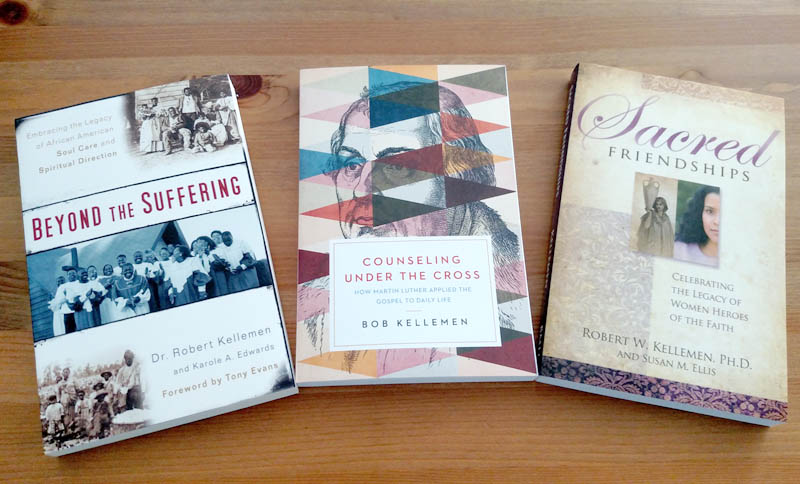
Reviewer: Bob Kellemen, Ph.D., is the author of “Beyond the Suffering: Embracing the Legacy of African American Soul Care and Spiritual Direction,” “Soul Physicians,” and “Spiritual Friends.”

There Will Be Blood

There Will Be Blood

Nominated for eight academy awards, “There Will Be Blood” plays like a modern-day version of Genesis 4. Though many Christians may resist seeing it, and many who do may wish they hadn’t, “Blood” is replete with themes of biblical proportions. It is certainly not a “Christian movie,” but Christianity thoroughly addresses the issues it raises: greed, envy, hypocrisy, rage, lying, manipulation, selfishness, self-sufficiency, and a plethora of other sins of the flesh and idols of the heart.

The movie stars Daniel Day-Lewis as Daniel Plainview whose sin is in plain view for all to see, despise, and be haunted by. Not a single word is spoken in the first fifteen minutes of the movie. Yet the scene speaks volumes. Daniel falls down a mind shaft severely hurting his leg. Rather than crying out to God or to anyone else for help, Daniel wordlessly and arrogantly works his way out of the pit rug by rug, dragging his lifeless limb behind him. The metaphor has been written: “I am my own Savior.” Daniel in the lion’s den refuses to pray to the Lion of the Tribe of Judah.

In the next scene, this sinner who thinks he can save himself learns from a mysterious stranger that there’s oil in those hills of New Boston. Traveling to the California oil fields at the turn of the 20th Century, Plainview brings his young son, H. W. (played by Dillon Freasier), who serves as a prop to provide the image of a congenial family man. Upon arrival in New Boston, CA, Daniel meets the Sunday family, headed by patriarch Abel (remember Genesis 4). Abel’s son Eli (played by Paul Dano) is a young faith-healing evangelist-pastor who turns out to be as consummately evil as Plainview, and a tad bit slimier.

Neither man displays a single redeeming quality. Both men play games with the Redeemer. Eli uses God to amass a following. Daniel uses God to manipulate God’s followers into signing land over to him, even to the point of feigning acceptance of Christ. In “There Will Be Blood,” blood is shed, but the shed blood of Christ is never received with a sincere heart.

The darkness of Daniel’s life is suffocating. As he ages (the movie spans nearly forty years in its nearly three-hour run), Daniel’s evil ripens. Where he once at least feigned love for H. W., by the end of the movie Daniel disowns him. In perhaps the only sign of grace in the entire movie, H. W., mute due to an earlier drilling accident, signs to his father “I love you” right after his prodigal father disowns him. Off H. W. goes with his wife Mary (yet another biblical allusion) to make a different life for himself in Mexico.

Christian theology sees life as a three-act play of creation, fall, and redemption. God designs humanity with dignity (creation), sin mars humanity with depravity (fall), and Christ restores and rescues humanity with salvation (redemption). There will be blood is an accurate portrayal of what our world would be like if there were no creation and no redemption–only fall. There is nothing redeemable in humanity because there is nothing human to redeem. We are, in the eyes of “Blood,” devolved animals seeking to devour one another.

You leave “Blood” feeling bloody, dirty, filthy. But “Blood” doesn’t leave you. It preoccupies your mind, disturbs your soul, and troubles your spirit. You ask yourself, “Is that all there is?”

And the answer is, “Without Christ, that is indeed all that there is.” Self. Self-sufficiency. Evil. Hatred. Rage. Hopelessness. Helplessness.

This decidedly un-Christian movie about the first decades of the 20th century has perhaps the strongest evangelistic message of any film of the first decade of the 21st century. Certainly unintended, “Blood” depicts exactly why every human being needs the blood of Christ. It is an amazing picture of the amazing sin that requires amazing grace.

Our worst sin is not our greed, evil, rage, hatred, drinking, womanizing, etc. Our worst sin, and the only unforgivable sin, is our refusal to acknowledge our sinfulness, the refusal to ask for forgiveness. We are sick undo death and in denial about our deadness, thinking that we can raise ourselves.

What can wash away our sin of self-sufficiency? Nothing but the blood.